It feels like you can’t open a browser tab these days without getting hit by a wave of AI panic.
One day, the headlines say AI will cure all diseases.
The next day, they say robots are coming for your job.
It’s exhausting, isn’t it?
At My Core Pick, we spend a lot of time sifting through the noise to find the tools and trends that actually matter.
And here is the truth we’ve found.
The future of AI isn’t about Terminator-style robots taking over the world.
It isn’t even really about ChatGPT writing bad poetry.
The real future of AI is much quieter, much more personal, and surprisingly helpful.
It’s about integration.
It’s about the technology fading into the background until you barely notice it’s there, yet you can’t imagine living without it.
So, let’s put the hype aside for a moment.
Let’s talk about what your actual daily life is going to look like in the next few years.
Here is the reality of your future with AI.
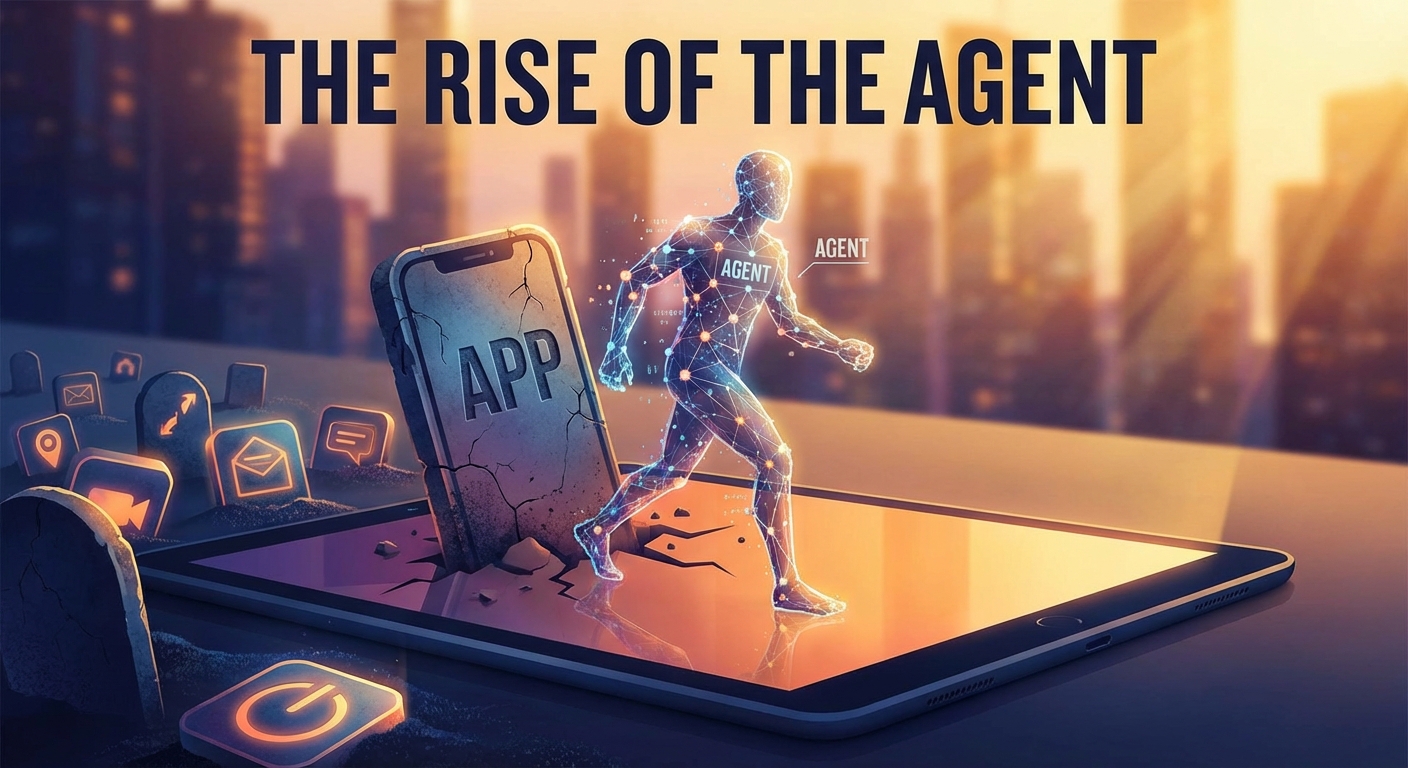
1. The Death of the "App" and the Rise of the Agent
Right now, your digital life is fragmented.
You have an app for groceries. An app for your calendar. An app for travel.
You are the glue holding all these pieces together.
If you want to plan a trip, you have to open Expedia, check your Gmail for dates, open Uber to check ride costs, and text your partner to confirm.
That friction is about to disappear.
The "Do It for Me" Era
We are moving from chatbots to "agents."
A chatbot answers a question. An agent performs a task.
In the near future, you won’t open five different apps to book a dinner date.
You will simply tell your AI agent: "Book a table for two at a quiet Italian place downtown for Friday night, check my calendar to make sure I’m free, and order an Uber to get us there."
The AI negotiates with the restaurant’s AI.
It checks your schedule.
It handles the logistics.
You just get a notification: "Dinner is booked for 7:30 PM. Your ride arrives at 7:00."
Personalized Context is King
Currently, AI models are smart, but they don't know you.
That is changing rapidly.
Future operating systems (on your phone and laptop) will have on-device AI that remembers your context.
It will know you hate spicy food.
It will know you prefer aisle seats on planes.
It will remember that you’re trying to save money this month.
Every interaction will be filtered through the lens of your specific preferences, without you having to repeat yourself.
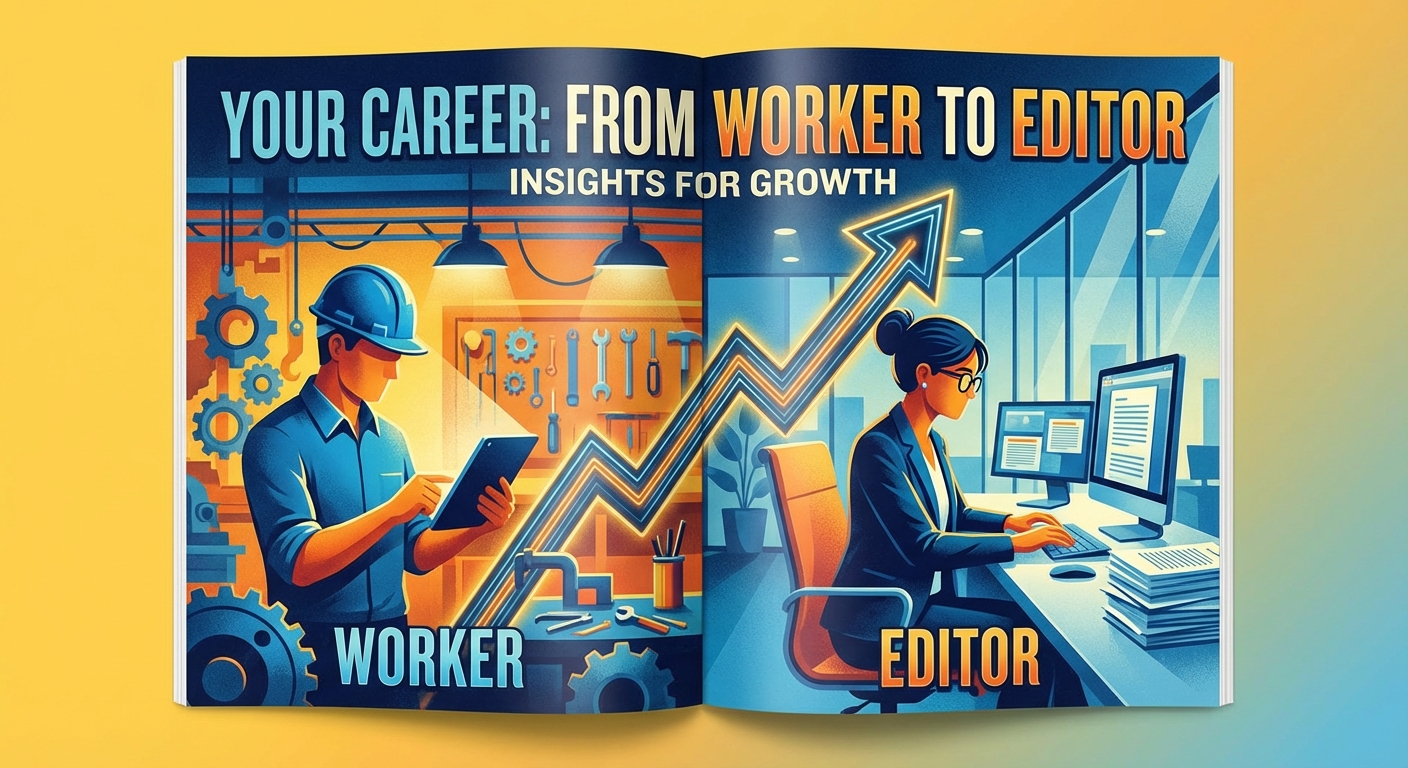
2. Your Career: From Worker to Editor
This is the big fear for most people.
Will AI replace me?
For the vast majority of professionals, the answer is "No, but it will change what you do."
The era of the blank page is over.
We are entering the era of curation and editing.
The End of Drudgery
Think about the parts of your job you hate.
Summarizing long meeting notes.
Drafting routine emails.
Digging through spreadsheets to find one specific trend.
This is where AI shines.
Your future workday involves an AI "co-pilot" that runs constantly in the background.
It sits in on your Zoom calls and emails you a to-do list afterward.
It drafts the boring quarterly report for you to review.
Your job shifts from creating the raw material to refining the strategy.
The Skill Shift
This means the skills that get you hired are changing.
Technical rote memorization is becoming less valuable.
If an AI can write code or draft a contract, knowing the syntax isn't the competitive advantage anymore.
The advantage is knowing what to build or why the contract matters.
We believe the most valuable employees of the next decade will be those with high "taste" and critical thinking.
You need to know when the AI’s output is mediocre.
You need the human intuition to say, "This data is correct, but the tone is wrong for our client."
You become the conductor of the orchestra, not the person playing every instrument.
3. Hyper-Personalized Education and Learning

If you have kids, or if you love learning new skills, this is the most exciting vertical.
The current education model is a factory.
One teacher. Thirty students. One curriculum.
If you fall behind, you’re lost. If you’re ahead, you’re bored.
AI breaks this factory model entirely.
The 1:1 Tutor for Everyone
Imagine a tutor that has infinite patience.
It knows exactly how your brain works.
If you don't understand a concept in physics, it doesn't just repeat the definition.
It uses an analogy based on your favorite video game.
If you are a visual learner, it generates a diagram instantly.
This isn't science fiction; tools like Khan Academy are already piloting this with Khanmigo.
Just-in-Time Learning
For adults, the future is "just-in-time" learning.
You won't need to take a six-month course to learn a new software.
Your AI interface will teach you as you go.
Need to edit a video?
You won't watch a generic tutorial.
Your AI will highlight the buttons on your screen and guide your mouse, explaining the steps in real-time.
The barrier to entry for creativity is about to hit zero.
4. Healthcare: Proactive Instead of Reactive
This is where AI gets personal—literally.
Right now, healthcare is reactive.
You feel sick. You go to the doctor. They try to fix it.
By the time you feel symptoms, the problem is often already advanced.
AI, combined with wearable tech (like the Apple Watch or Oura Ring), is shifting us toward proactive health.
The 24/7 Guardian
In the future, your health data isn't just sitting in an app.
An AI is constantly analyzing your baseline.
It notices that your resting heart rate has crept up slightly over three days.
It correlates that with your sleep data and your recent calendar stress.
It might nudge you: "You seem to be fighting off a bug. Maybe skip the gym today and get to bed an hour early."
Democratizing Expertise
Specialized medical knowledge is expensive and hard to access.
AI diagnostic tools are becoming incredibly good at reading X-rays, spotting skin conditions, and analyzing blood work.
This doesn't replace doctors.
It gives your general practitioner the diagnostic power of a top-tier specialist.
It means faster diagnoses, fewer errors, and catch-rates for diseases that human eyes might miss.
For you, this means a longer, healthier life with fewer surprises.
5. The Human Premium: What's Left for Us?
If AI does the logistics, the scheduling, the coding, and the diagnosing... what do we do?
This is something we think about a lot at My Core Pick.
As AI becomes cheap and abundant, human connection becomes scarce and valuable.
We call this the "Human Premium."
Empathy Cannot Be Automated
AI can simulate empathy, but it cannot feel it.
In a crisis, you don't want a chatbot. You want a human being who understands loss or fear.
Caregiving, therapy, coaching, and leadership are safe.
In fact, they will become high-status roles.
When "average" work can be generated instantly, "human" work becomes a luxury good.
Curation and Trust
In a world flooded with AI-generated content, trust is the new currency.
You will gravitate toward creators, writers, and brands that have a distinct human voice.
You will want to know that a real person vetted that product recommendation.
You will want to read a story that comes from genuine lived experience, not a database of probability.
Your unique perspective—your "you-ness"—is your biggest asset.
6. How to Prepare (Without Panicking)
So, how do you position yourself for this future?
Don't try to out-robot the robot.
Don't try to be faster at data entry than the AI. You will lose.
Instead, lean into the things AI is bad at.
Be Curious, Not Resistant
Play with the tools.
Don't ignore ChatGPT or Midjourney or the new features in your phone.
The people who will succeed are the ones who learn to direct the AI.
Treat it like a very smart, very literal intern. Learn how to delegate to it.
Double Down on Soft Skills
Work on your communication.
Work on your ability to negotiate.
Work on your emotional intelligence.
These are the skills that allow you to navigate a room of people and get things done.
AI can crunch the numbers, but it can't convince the board members to sign the deal.
That’s still on you.
Summary
The hype cycle is noisy. It’s designed to sell clicks and generate fear.
But when you look past the headlines, the future looks bright.
It looks like less time spent on admin work and more time on creative work.
It looks like better health and personalized education.
It looks like a world where technology finally adapts to us, rather than us adapting to it.
The future of AI isn't about replacing you.
It’s about unleashing you.
Stay curious.
— The My Core Pick Team