Here is the blog post, optimized for the 'My Core Pick' audience.
Zero Ad Spend, 10 B2B Clients: The Founder’s Guide to Winning on LinkedIn
I remember the day I decided to stop paying for leads.
I was looking at my monthly credit card statement, staring at a massive charge for a LinkedIn Ads campaign.
The results? A handful of cold leads, zero closed deals, and a serious dent in my runway.
It felt like setting money on fire.
For early-stage founders and B2B service providers, ad spend is a dangerous game. It requires a budget to test, a budget to fail, and a budget to scale.
But here is the good news.
You don't need ads to get clients.
I shifted my strategy entirely to organic growth. Within 90 days, I landed 10 high-ticket B2B clients. Total ad spend: $0.
It wasn’t luck. It was a system.
Today, I’m sharing that exact blueprint with you.
Phase 1: Transform Your Profile from a Resume into a Landing Page
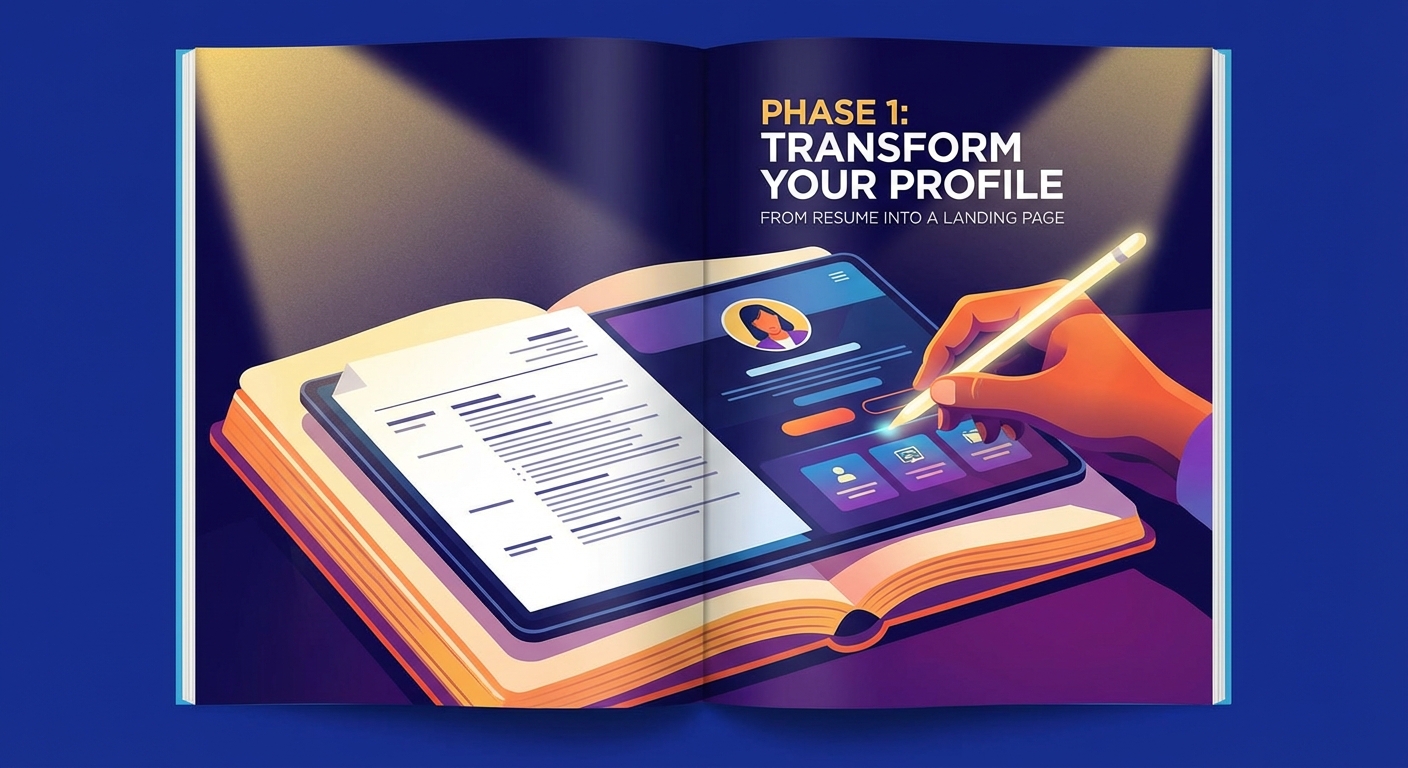
Most founders make a critical mistake on LinkedIn.
They treat their profile like a CV.
They list their past jobs, their university degrees, and their skills in a dry, corporate list.
Here is the harsh truth: Your prospects do not care where you went to school.
They care about whether you can solve their painful, expensive problems.
To get clients, you must treat your profile like a high-converting landing page.
The Headline
This is the most valuable real estate you own.
If your headline says "Founder at [Company Name]," you are invisible.
Change it to a promise. Use this formula:
I help [Target Audience] achieve [Specific Result] through [Your Method].
For example:
"I help SaaS Startups add $50k in MRR through automated email flows."
Now, when you comment on a post, people see exactly what you do before they even click your name.
The Banner Image
Stop using the default grey background or a generic stock photo of a laptop.
Use Canva to create a banner that restates your value proposition.
Include social proof if you have it. Logos of past clients or a quick testimonial work wonders here.
The "About" Section
Do not write this in the third person.
"John is a visionary leader..." No. Stop that.
Write it as a letter to your ideal client.
Structure it like this:
1. Call out their problem.
2. Agitate the pain of that problem.
3. Introduce your solution.
4. Provide social proof.
5. Give a clear Call to Action (CTA).
Phase 2: Content Strategy—Build Authority, Don't Just Make Noise
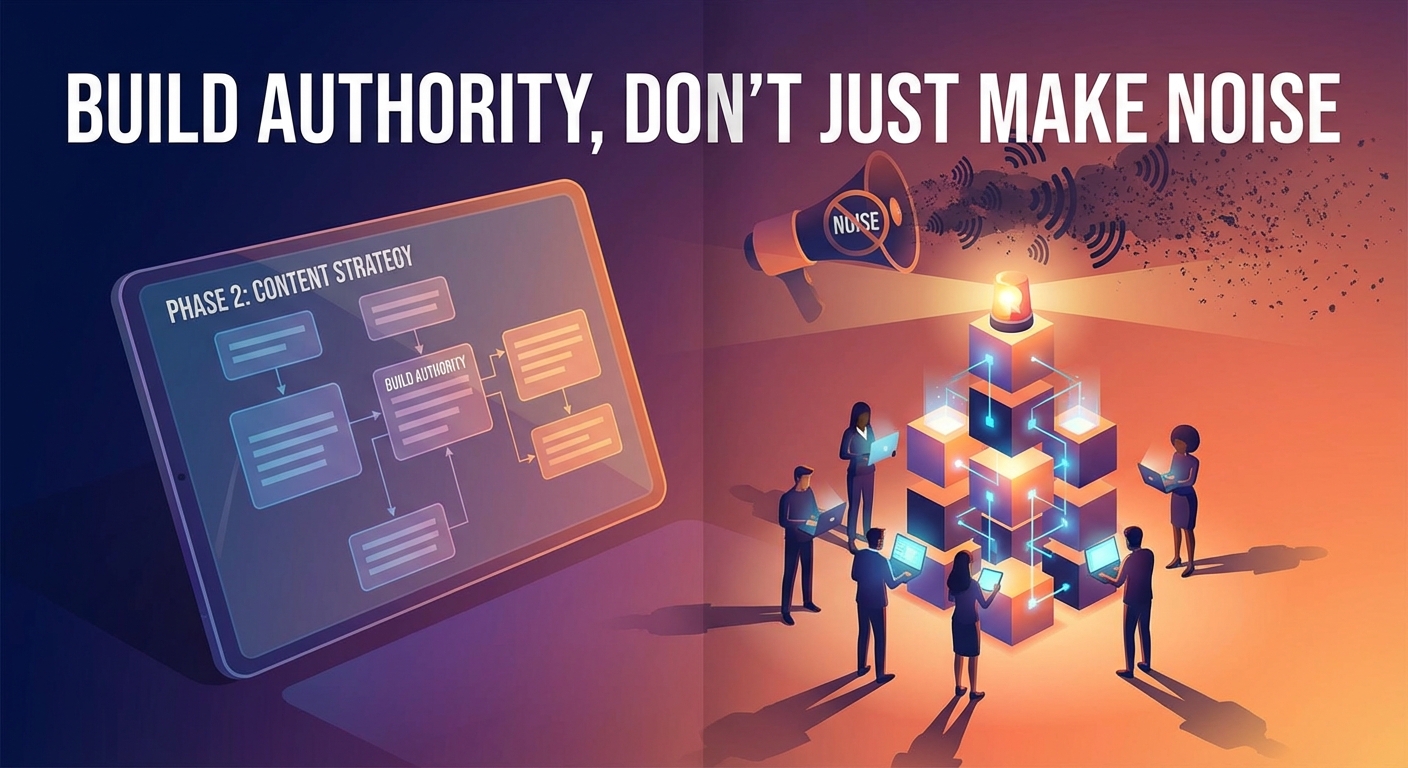
You cannot get clients if you are a ghost.
However, you also don't need to post three times a day like a frantic influencer.
You need a content strategy that builds trust.
When a prospect visits your profile, they should think, "Wow, this person knows their stuff."
The "Build in Public" Approach
The easiest content for a founder to write is the truth.
Document your journey.
Did you just fix a bug that was killing your retention? Write about it.
Did you have a sales call that went sideways? Share the lesson you learned.
People buy from humans, not faceless logos. Vulnerability builds trust faster than a polished press release ever could.
The Educational How-To
Give away your secrets.
I know this sounds counterintuitive. You might think, "If I tell them how to do it, they won't hire me."
The opposite is true.
When you give away the "how," you prove your competence.
Most clients are too busy to do it themselves anyway. They will see your process and pay you to execute it for them.
Frequency Matters
Aim for consistency over volume.
Post 3 to 4 times a week.
Prioritize Monday through Thursday mornings.
If you can stick to this for a month, the algorithm will start to reward you.
Phase 3: The Engagement Engine (Or, How to Be Everywhere)

This is the "secret sauce" that most people skip.
Posting content is passive. You post and hope people see it.
Engagement is active. You go to where the people are.
If you have zero followers, posting on your own feed is like shouting in an empty room.
You need to borrow other people's audiences.
The Strategy of Top Comments
Identify 10-20 "Big Creators" in your niche.
These are people with 50k+ followers who post about topics relevant to your industry.
Turn on notifications for their posts.
When they post, be one of the first to comment.
But don't just write "Great post!" or "Thanks for sharing."
Add value. Disagree politely. Add a unique perspective.
If your comment is insightful, their followers will see it. They will click on your profile (which is now optimized).
And just like that, you have free traffic.
Support Your Peers
Find other founders who are at your level.
Connect with them. Engage with their content daily.
This creates a support pod.
When you support them, they support you.
This initial traction helps your posts break out of the "zero engagement" jail and reach a wider audience.
Phase 4: Direct Outreach—DMing Without Being "Salesy"
This is where the money is made.
Inbound leads are great, but outbound gives you control.
However, do not send cold pitches.
Nothing gets you blocked faster than sending a connection request followed immediately by a 5-paragraph sales pitch.
We are going to use "Social Selling."
The Connection Request
Always add a note.
Keep it casual. Mention something specific about their profile.
"Hey [Name], saw your post about [Topic] and loved your take on X. Would love to connect."
This has a high acceptance rate because it proves you aren't a bot.
The "No-Ask" Value Drop
Once they accept, do not pitch.
Wait a few days. Engage with their content if they post.
Then, send a message that adds value without asking for anything.
"Hey [Name], I saw you're scaling your sales team. I wrote a quick SOP on onboarding reps that helped us save 10 hours a week. Happy to send it over if you'd find it useful. No strings attached."
If the asset is good, they will say yes.
The Transition
Once you have sent the value, you have earned the right to have a conversation.
Ask about their current challenges.
"Curious, how are you currently handling [Problem X]? We usually see teams struggle with [Y] at this stage."
Treat it like a chat at a coffee shop, not a boardroom presentation.
If they admit to having a problem, ask if they'd be open to a 15-minute chat to share ideas.
Phase 5: Consistency and the "30-Minute Routine"
The biggest enemy of this strategy is burnout.
You start hot, post every day for a week, get no immediate leads, and quit.
You need to view this as a 90-day play.
To survive, you need a system.
The Daily Workflow
I recommend blocking out 30 minutes every morning before you open your email.
Here is the breakdown:
- 10 Minutes: Write or edit your post for the day (or the next day).
- 10 Minutes: Engage with the "Big Creators" (commenting).
- 10 Minutes: Send 3-5 connection requests and reply to DMs.
That’s it.
If you do this for 30 minutes a day, you are doing more than 99% of your competition.
Tracking Your Data
Don't obsess over "Likes."
Likes are a vanity metric.
Obsess over "Profile Views" and "DM Conversations."
If your profile views are going up, your commenting strategy is working.
If your DMs are turning into calls, your content is resonating.
Conclusion: It’s Time to Own Your Growth
Relying on ads means renting your audience.
Building a personal brand on LinkedIn means owning your audience.
Getting your first 10 clients with zero ad spend requires patience.
It requires you to put yourself out there.
It requires you to be helpful before you are profitable.
But once that flywheel starts spinning, it becomes an asset that pays dividends for years.
The clients I gained from this method were not just transactions.
They became long-term partners because they bought into me and my expertise before they even signed the contract.
So, close your ad manager.
Open your LinkedIn profile.
It’s time to get to work.