Here is a blog post written specifically for 'My Core Pick', following your structural and tonal guidelines.
Treating Produce Like Protein: How Whole-Vegetable Butchery Elevates Plant-Based Dining
For the longest time, I treated vegetables as the supporting act.
They were the colorful sidekick to the main event. Maybe they were steamed, maybe they were tossed in a salad, but they never demanded attention.
Then, I learned about vegetable butchery.
It sounds like an oxymoron, doesn't it? We usually associate "butchery" with meat cleavers and cuts of beef.
But when you apply those same artisanal techniques—carving, curing, smoking, and searing—to produce, something magical happens.
You stop eating vegetables because you "have to." You start eating them because they are complex, savory, and satisfying.
At My Core Pick, we believe in elevating your culinary game. Today, I want to talk about shifting the spotlight to the center of the plate.
Here is how treating your produce like protein can revolutionize your kitchen.
The Philosophy of Vegetable Butchery
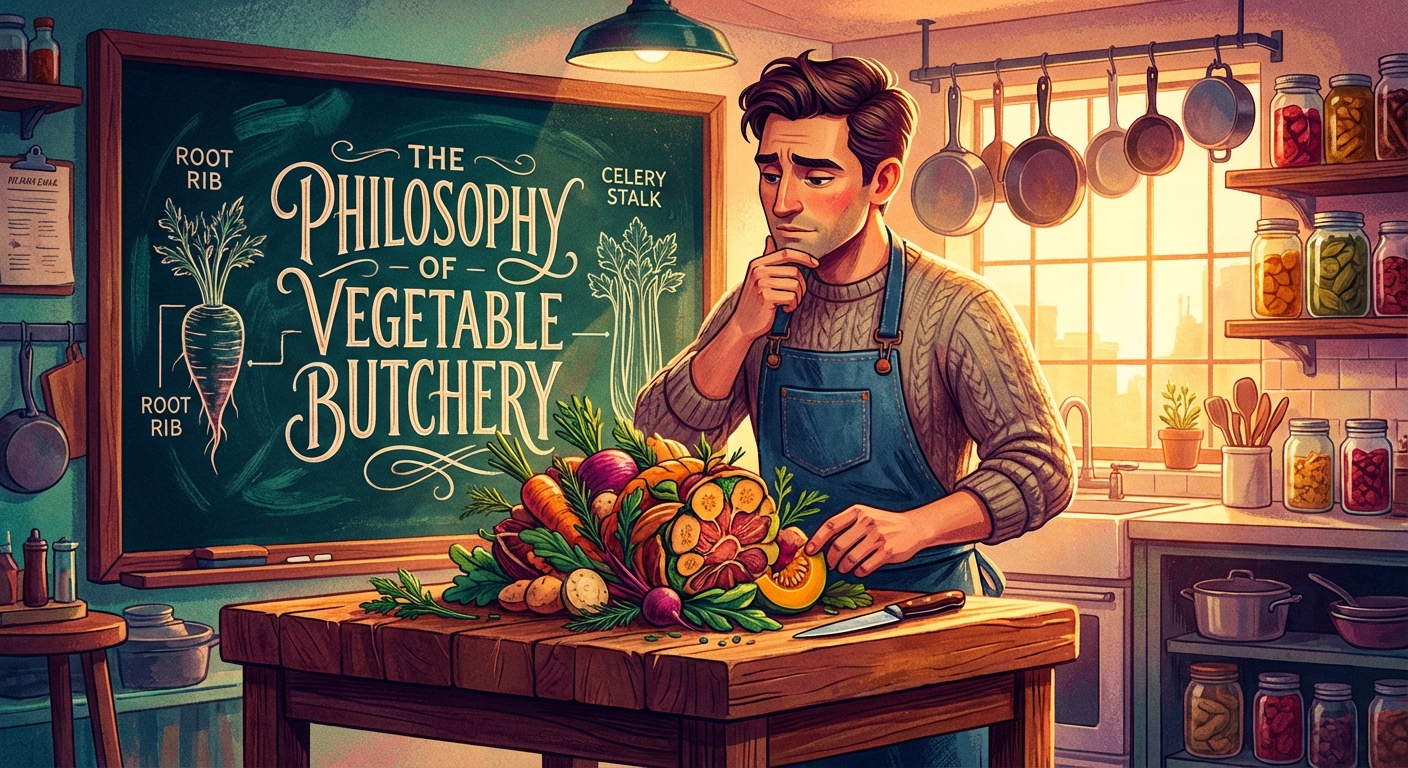
It starts with a mindset shift.
Traditionally, we peel, chop, and boil vegetables until they are soft and innocuous. Vegetable butchery asks us to respect the ingredient's structural integrity.
It is about looking at a butternut squash the way a chef looks at a leg of lamb.
Seeking the Maillard Reaction
Why do we love a good steak or a roasted chicken? It’s the browning.
That browning is the Maillard reaction—a chemical reaction between amino acids and reducing sugars that gives browned food its distinct flavor.
Vegetables are packed with sugars waiting to be caramelized.
When you treat a slab of cabbage or a whole cauliflower with high heat and fat, you unlock savory depth. You create a "crust."
You create a sensory experience that mimics the satisfaction of eating meat.
Texture is King
Mushy vegetables are the enemy of enjoyment.
When you boil a carrot, it becomes uniform and soft. But when you roast a whole carrot with the skin on?
You get a blistered, chewy exterior and a tender, sweet interior.
That contrast is what makes protein appealing. By butchering vegetables thoughtfully, we preserve that crucial interplay of textures.
We want a knife-and-fork experience, not a spoon experience.
The "Nose-to-Tail" Approach (Root-to-Stem)
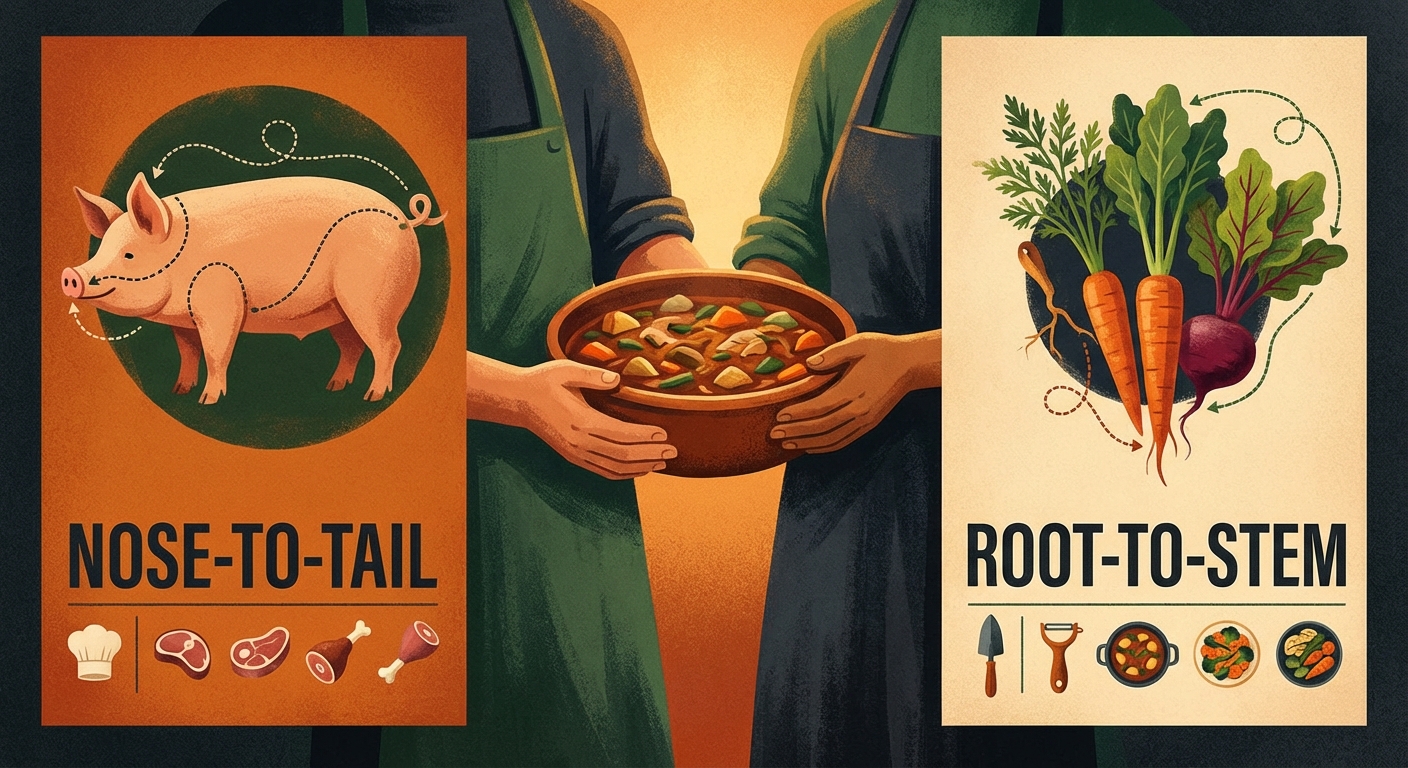
In the meat world, "nose-to-tail" cooking is about ethics and maximizing value. It means using every part of the animal.
Vegetable butchery adopts this exact ethos, often called "root-to-stem."
Stop Throwing Away Flavor
I used to throw away broccoli stems. I’m embarrassed to admit it now.
The stem is actually the sweetest part of the broccoli. If you peel the tough outer layer, the inside is tender and delicious.
Sliced into coins and sautéed, they have the texture of water chestnuts.
The same goes for cauliflower leaves. Roasted with olive oil and salt, they turn into crispy chips that rival kale.
The Power of Skins and Peels
We are conditioned to peel everything.
But the skin is where the nutrients—and the flavor—often live.
Leaving the skin on a roasted potato adds earthiness. Leaving the skin on a squash helps it hold its shape during a long braise.
If you must peel, save those scraps.
I keep a freezer bag for carrot peels, onion skins, and mushroom stalks. When it’s full, I boil it all for a rich, zero-cost vegetable stock.
It’s respectful to the produce, and it saves money.
Techniques to Master in Your Kitchen
You don't need a degree from culinary school to do this. You just need to be willing to experiment.
Here are the techniques I use to turn plants into centerpieces.
The Whole Roast
This is the showstopper.
Take a whole head of cauliflower. Rub it with harissa, tahini, or just good olive oil and herbs. Roast it until it is deeply browned and tender all the way through.
Carve it at the table like a roast beef.
Whole roasted eggplant is another favorite of mine. Prick the skin, roast it until it collapses, and split it open.
The inside becomes a smoky, creamy custard that needs nothing more than lemon and sea salt.
Smoking and Curing
You can cure vegetables just like you cure fish.
One of the most impressive appetizers I’ve ever made is "carrot lox."
You roast whole carrots in salt to draw out moisture, then marinate them in liquid smoke, kelp, and oil.
Sliced thin on a bagel, the texture and flavor are shockingly close to smoked salmon.
Smoked beets are another revelation. The natural earthiness of the beet pairs perfectly with wood smoke.
The Heavy Sear
This is where your cast iron skillet shines.
Instead of chopping mushrooms, leave them whole or halved. Press them down into a hot skillet with a heavy weight (or another pan).
This presses out the water and creates a dense, meaty sear.
Maitake and Oyster mushrooms are perfect for this. They develop crispy edges that taste like bacon.
You can also do this with thick "steaks" of cabbage. Sear them hard, then finish them in the oven with a balsamic glaze.
The Vegetable Butcher’s Toolkit
You can’t do good work without good tools.
If you are going to treat produce like protein, you need gear that can handle the job.
The Chef’s Knife
A sharp knife is non-negotiable.
Cutting through a kabocha squash or a large sweet potato requires force. A dull knife is dangerous.
Invest in a heavy-duty 8-inch chef’s knife. You want something with a bit of weight to help you glide through dense root vegetables.
Keep it honed. Clean cuts heal faster on living things, and they cook more evenly in the pan.
The Mandoline
For curing and marinating, precision matters.
If you want to make carpaccio out of radishes or zucchini, you need paper-thin slices.
A mandoline allows you to get consistent thickness that is impossible to achieve by hand.
Just be careful—use the hand guard. Always.
Cast Iron Cookware
To get that steak-house char on a vegetable, stainless steel sometimes struggles.
Cast iron holds heat incredibly well.
When you drop a cold slab of celery root into a hot cast iron pan, the pan stays hot. That is the secret to the crust.
It also transfers seamlessly from the stovetop to the oven for roasting.
Elevating the Marinade
Protein is often a vehicle for sauce. Vegetables absorb sauce even better.
Because vegetables have high water content, they can be porous.
The Brine
Brining isn't just for turkey.
I like to brine thick slices of tofu or eggplant before cooking them.
A simple mixture of water, salt, sugar, and aromatics changes the cellular structure. It seasons the vegetable from the inside out.
It also helps retain moisture during high-heat cooking.
The Glaze
Vegetables love sweetness and acid.
Toward the end of roasting, I always apply a glaze.
Think maple syrup and soy sauce on Brussels sprouts. Or pomegranate molasses on roasted eggplant.
The sugars in the glaze caramelize on the hot vegetable surface, creating a sticky, savory coating.
It adds that "finger-licking" quality usually reserved for ribs or wings.
Why This Matters for Your Health (and Palate)
At My Core Pick, we are always looking for ways to make healthy living sustainable.
Diets fail because people feel deprived. They miss the "heaviness" and satisfaction of comfort food.
Vegetable butchery bridges that gap.
Saturation and Satiety
When you eat a portobello mushroom that has been seared in garlic butter and thyme, you feel full.
You are stimulating the umami receptors on your tongue.
This makes it easier to reduce meat consumption without feeling like you are eating "rabbit food."
Visual Appeal
We eat with our eyes first.
A pile of steamed spinach looks sad. A whole roasted acorn squash stuffed with wild rice and cranberries looks celebratory.
When you present vegetables with the same pomp and circumstance as a roast, you elevate the dining experience.
It makes a Tuesday night dinner feel special.
Three Simple Ways to Start Tonight
Ready to try it? You don't need a complicated recipe. Just grab a vegetable and get started.
1. The Cauliflower Steak
Slice a head of cauliflower right down the middle into two thick, 1-inch slabs.
Sear them in a hot pan with oil until dark brown on both sides.
Transfer to the oven to finish cooking. Top with chimichurri.
2. The Hasselback Potato (or Beet)
Take a potato or beet. Make thin slices all along the length, but stop your knife before you cut all the way through.
Roast it. The slices will fan out, creating dozens of crispy edges.
Baste it with garlic butter halfway through.
3. Smashed Cucumbers
This is a cold butchery technique.
Take a whole cucumber. Smack it with the flat side of your knife until it cracks open.
Roughly chop it. The jagged edges hold dressing much better than clean slices.
Toss with soy sauce, sesame oil, and chili flakes.
Final Thoughts
The era of the limp, boiled vegetable is over.
By adopting the tools and techniques of the butcher, we unlock the true potential of the plant kingdom.
It is better for the planet, it reduces waste, and frankly, it just tastes better.
So, next time you are at the market, don't just look for salad ingredients. Look for something you can carve, sear, and celebrate.
Sharpen your knife. Heat up your skillet. And give your vegetables the respect they deserve.
You might just find that the best "steak" you’ve ever had grew in the ground.