Here is the blog post, written specifically for My Core Pick.
Why It’s Time to Ditch SMS Codes: Switching to Authenticator Apps to Stop SIM Swapping
Imagine waking up tomorrow morning and reaching for your phone.
You expect to see notifications, emails, maybe a text from a friend.
Instead, you see "No Service" in the top corner.
You assume it’s a glitch. You restart your phone. Still nothing.
You try to log into your email on your laptop to report the issue.
But your password doesn’t work.
You click "Forgot Password." The site tells you a recovery code has been sent to your phone number.
But you don’t get the text. Someone else did.
This isn’t a plot from a sci-fi movie. It is the reality of SIM Swapping, and it is rising at an alarming rate.
For years, we’ve been told that Two-Factor Authentication (2FA) is the gold standard of security.
And it is.
But not all 2FA is created equal.
If you are still relying on SMS text messages to receive your login codes, you are leaving the back door of your digital life wide open.
Here at My Core Pick, we are obsessed with optimizing your digital toolkit.
Today, we are going to explain why SMS is broken, what SIM swapping actually is, and how you can lock down your accounts using an Authenticator App.
The Silent Threat: What is SIM Swapping?
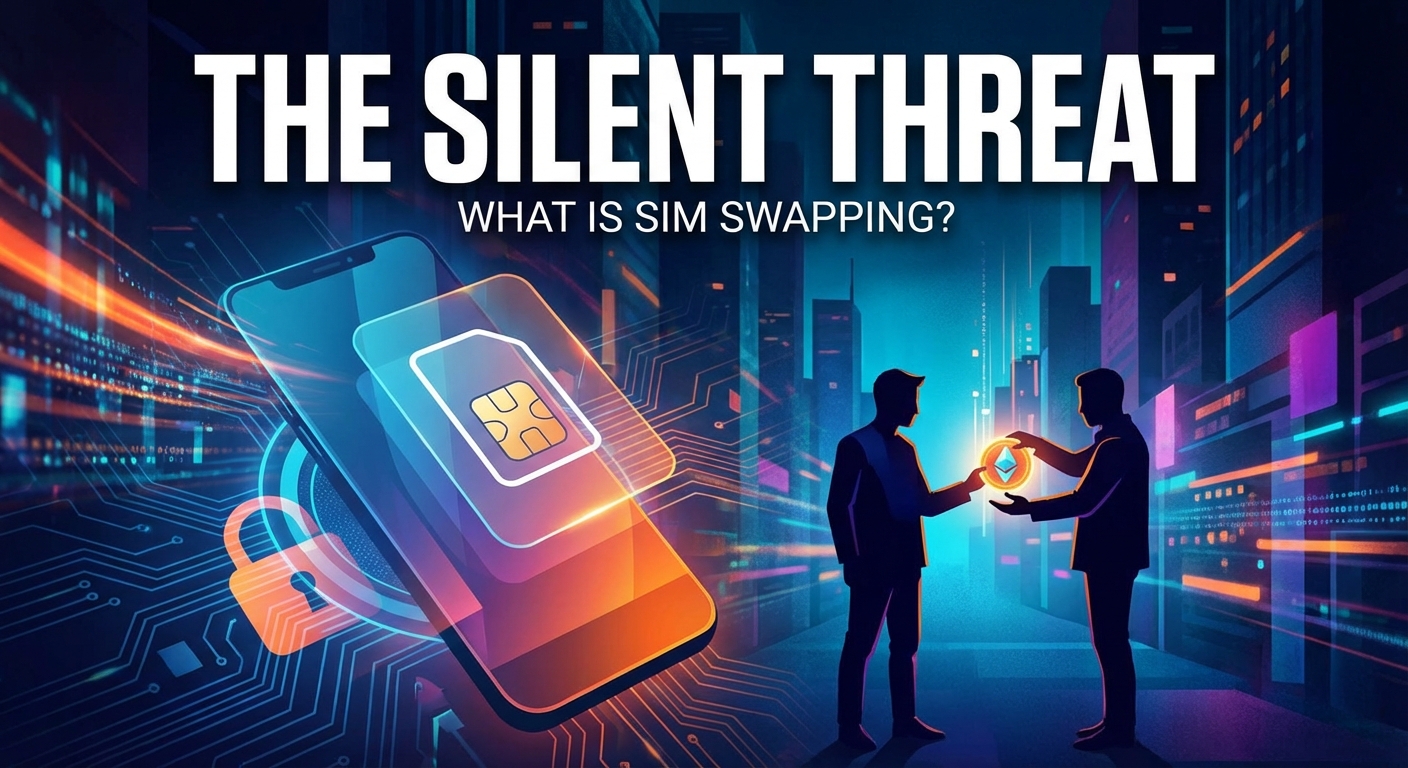
To understand why we need to switch tools, we first need to understand the threat.
SIM swapping is a form of identity theft.
It is surprisingly low-tech.
Hackers don't need to break into your phone physically.
They don't need to install malware on your device.
They just need to trick your mobile carrier.
How the Attack Works
The attacker gathers a little bit of info about you.
This could be from a data breach, social media, or a phishing email.
They call your mobile carrier’s customer support line.
They pretend to be you.
They claim they lost their phone or bought a new one and need to activate a new SIM card.
If the customer support agent falls for the story, they "port" your phone number to the hacker's SIM card.
The Immediate Consequence
The moment that switch happens, your phone goes dead.
The hacker’s phone now receives all your calls and texts.
They immediately go to your bank, your email, and your crypto exchange.
They hit "Forgot Password."
When the service sends the SMS verification code, it goes straight to the hacker.
They change your passwords and lock you out.
It happens in minutes.
Why SMS 2FA is the Weakest Link
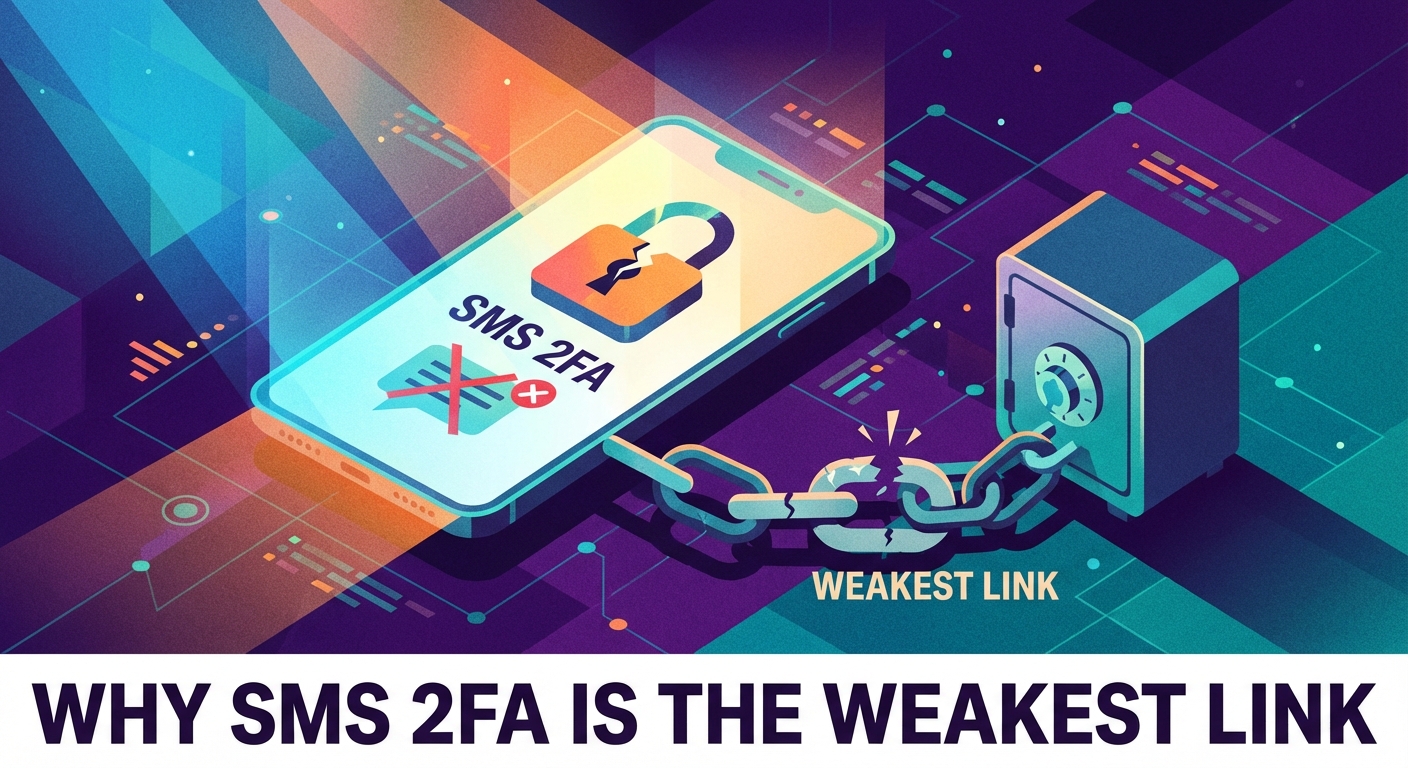
You might be wondering why SMS is even an option if it is so vulnerable.
The answer is convenience.
Everyone has a phone number. Everyone knows how to read a text message.
But SMS (Short Message Service) was built in the 1980s.
It was never designed to be a secure channel for sensitive banking information.
The Protocol Problem
SMS messages are generally not end-to-end encrypted.
They travel through archaic signaling protocols that can be intercepted.
But the biggest flaw isn't the technology itself.
It is the human element.
Your security relies entirely on a minimum-wage customer support agent at a mobile carrier store.
If they can be tricked (or bribed), your security dissolves.
We believe your security should be in your hands, not in the hands of a telecom provider.
That is why we need to move away from phone numbers as identifiers.
Enter the Authenticator App: Your Digital Bodyguard
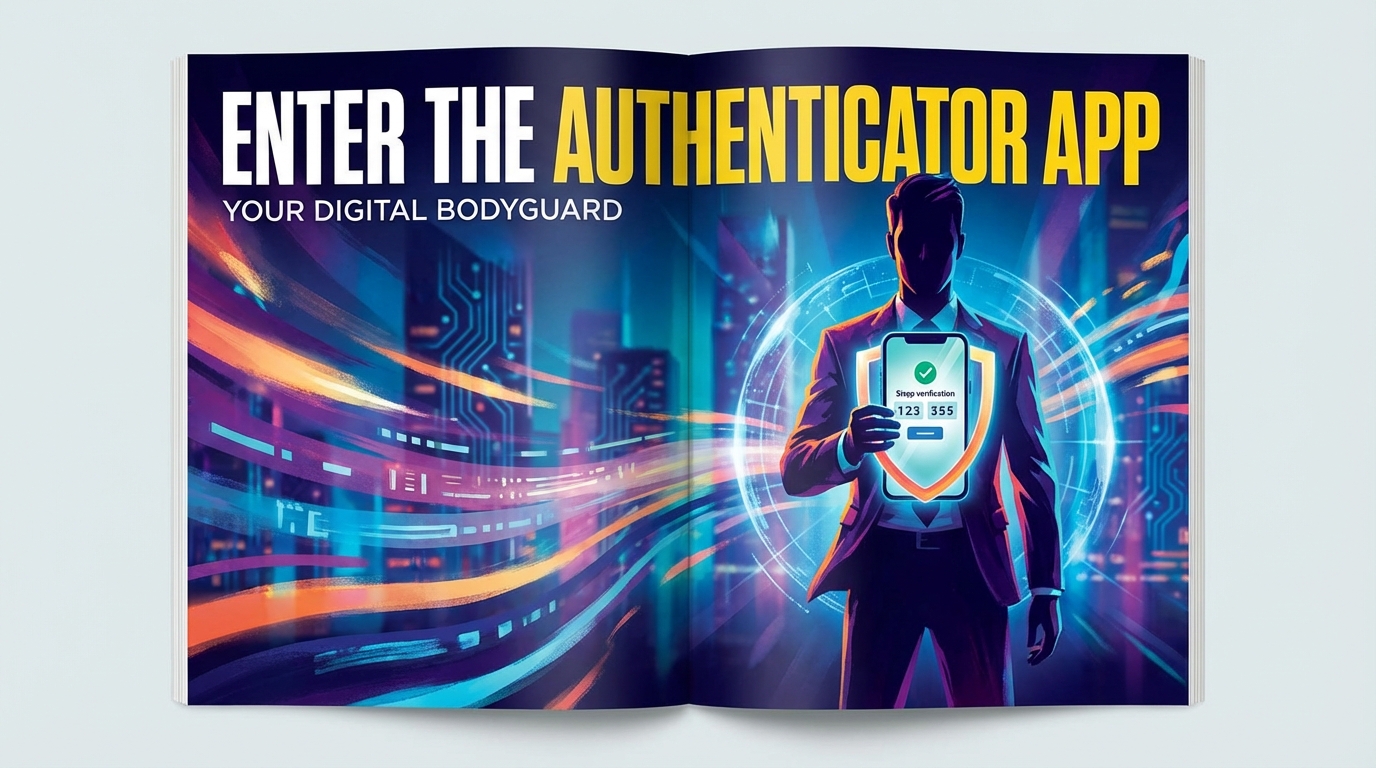
So, what is the alternative?
The answer is an Authenticator App.
You have probably heard of Google Authenticator or Microsoft Authenticator.
These apps generate Time-based One-Time Passwords (TOTP).
This sounds complicated, but the user experience is actually faster than SMS.
How It Works
When you set up an authenticator app, you scan a QR code provided by the website (like Gmail or Amazon).
This establishes a secret link between that specific device and the website.
The app then generates a 6-digit code.
Here is the key difference: The code changes every 30 seconds.
The code is generated locally on your device.
It does not require a cell signal.
It does not require Wi-Fi.
It does not care what your phone number is.
Even if a hacker steals your phone number via a SIM swap, they cannot generate the code.
They would need your physical unlocked phone to get in.
That is a massive upgrade in security.
My Core Pick: The Best Authenticator Apps to Use
If you search the App Store, you will find dozens of options.
Some are great. Some are filled with ads.
We have tested the most popular options to help you choose the right one for your workflow.
1. Google Authenticator
This is the grandfather of auth apps.
It is incredibly simple.
Historically, its biggest flaw was that if you lost your phone, you lost your codes.
However, Google recently added cloud syncing.
If you are deep in the Google ecosystem, this is a solid, no-frills choice.
2. Microsoft Authenticator
If you use Outlook or Office 365 for work, get this one.
For Microsoft accounts, it offers a "push" notification.
You don't even have to type a code; you just tap "Approve" on your phone.
It also includes a built-in password manager, though you don't have to use that feature.
It is robust, reliable, and enterprise-grade.
3. Twilio Authy
For a long time, Authy was the tech enthusiast's favorite.
Its main selling point is excellent multi-device support.
You can install it on your phone and your tablet.
If you lose your phone, you can simply revoke access to that device and use your tablet.
The interface is clean and user-friendly.
It is distinct from the big tech giants, which some privacy advocates prefer.
4. 1Password or Bitwarden
If you want the ultimate convenience, look at your password manager.
Premium password managers like 1Password and Bitwarden have built-in TOTP generators.
When you go to log in, the password manager fills in your username, password, and the 2FA code automatically.
It creates a seamless login experience.
However, there is a security trade-off here.
If you keep your password and your 2FA code in the same basket (the password manager), you are technically reducing it to single-factor authentication.
For high-value targets (like banking), we recommend keeping the 2FA code in a separate app.
For general accounts (like Netflix or Reddit), using your password manager is perfectly fine and very convenient.
How to Make the Switch (Without Getting Locked Out)
Switching from SMS to an app feels daunting.
You might be worried about locking yourself out of your accounts.
We have a simple workflow to make this painless.
Don't try to do all your accounts in one day.
Start with your "Core Three": Your Email, Your Bank, and Your Password Manager.
Step 1: Login and Locate
Log into the service (e.g., your Google Account).
Go to Security settings.
Look for "2-Step Verification" or "Two-Factor Authentication."
Step 2: Add the App BEFORE Removing SMS
Do not delete your phone number yet.
Select the option to "Set up Authenticator App."
A QR code will appear on your screen.
Open your chosen app on your phone and tap the "+" button.
Scan the screen.
Step 3: Verify and Test
The website will ask you to enter the 6-digit code displayed on your phone to confirm it works.
Once verified, log out and log back in.
Use the app code to ensure everything is working smoothly.
Step 4: The Cleanup
Once you confirmed the app works, go back to the settings.
Remove your phone number as a 2FA method if the site allows it.
Some banks force you to keep a number on file, but if you can remove it, do it.
This ensures that if your SIM is swapped, the hacker has no way to request a code via text.
The Vital Step Everyone Forgets: Backup Codes
There is one major risk with Authenticator Apps.
What happens if you drop your phone in the ocean?
Since the codes are generated on the device, you could be locked out.
This is why Backup Codes (or Recovery Codes) are essential.
Printing Your Keys
When you set up 2FA on a website, they will almost always show you a list of 8-10 "Backup Codes."
They will tell you to print them or save them.
Do not ignore this screen.
These are one-time-use master keys.
If you lose your phone, you can use one of these codes to get into your account and set up a new phone.
Storage Strategy
Print these codes out.
Put them in a physical folder in your house, or a fireproof safe.
Alternatively, save them as a secure note inside your encrypted password manager.
Do not just take a screenshot and leave it on your desktop.
Treat these codes like the keys to your house.
Conclusion: Take Control Today
We live in an era where our digital identities are just as important as our physical ones.
Relying on SMS text messages for security is like locking your front door but leaving the key under the mat.
It might stop an honest person, but it won't stop a criminal who is looking for it.
The transition to an Authenticator App takes a few minutes per account.
But the peace of mind is permanent.
You stop relying on the mobile carrier to protect you.
You start taking control of your own security.
Pick an app from our list above.
Start with your primary email account today.
Make the switch.
Your future self (and your bank account) will thank you.