The silence in our living room used to be deafening.
It wasn’t a peaceful, meditative silence.
It was the specific, heavy silence of four people scrolling through four separate screens.
We were physically together, sharing the same couch, but mentally, we were miles apart.
My husband was answering work emails.
I was doom-scrolling news headlines.
My teenager was deep in a TikTok loop, and my youngest was hypnotized by Roblox.
We had become what I call "alone together."
I realized we didn't need a punishment.
We didn't need me to storm into the room and confiscate devices like a dictator.
We needed an agreement.
We needed a Family Tech Treaty.
Here is how we moved from digital isolation to intentional connection, and how you can co-create this treaty with your family.
Why You Need a Treaty, Not a Ban

If you have teenagers, you know that bans don’t work.
Bans create rebellion.
They create a "me versus you" dynamic that erodes trust.
A treaty, by definition, is an agreement between parties.
It implies negotiation, compromise, and mutual respect.
When I first proposed this idea to my family, I expected eye rolls.
And honestly, I got a few.
But I framed it differently.
I admitted that I was struggling with my phone usage, too.
I told them I missed them.
I told them I felt tired and distracted.
By making it about us rather than them, the walls came down.
The Science of Connection
We briefly talked about why this matters.
We didn't need a lecture, but we needed context.
We talked about how screens trigger dopamine, making it hard to stop.
We discussed how constant notifications keep our brains in a state of low-grade anxiety.
Acknowledging that the devices are designed to be addictive took the shame out of it.
It wasn't that we were weak; it was that the tech is powerful.
So, we needed a strategy to manage it together.
Drafting the Treaty: The Family Meeting

You cannot draft this treaty on a Tuesday morning while rushing to school.
It requires a designated time.
We ordered pizza.
We made sure everyone was fed and comfortable.
We sat around the table with a large sheet of paper and a few markers.
This physical act of writing it down is crucial.
It makes the agreement tangible.
The Rules of Negotiation
Rule number one: Everyone gets a vote.
Rule number two: No shaming allowed.
Rule number three: Parents are not exempt (more on this later).
We started by asking a simple question: "What do we want our family time to feel like?"
The answers were surprising.
"Fun." "Relaxed." "No yelling."
Then we asked: "How do phones get in the way of that?"
My son admitted he hates it when he talks to me and I don’t look up from my text messages.
That stung, but it was fair.
This vulnerability set the stage for the actual rules.
Zone Defense: Defining Screen-Free Spaces
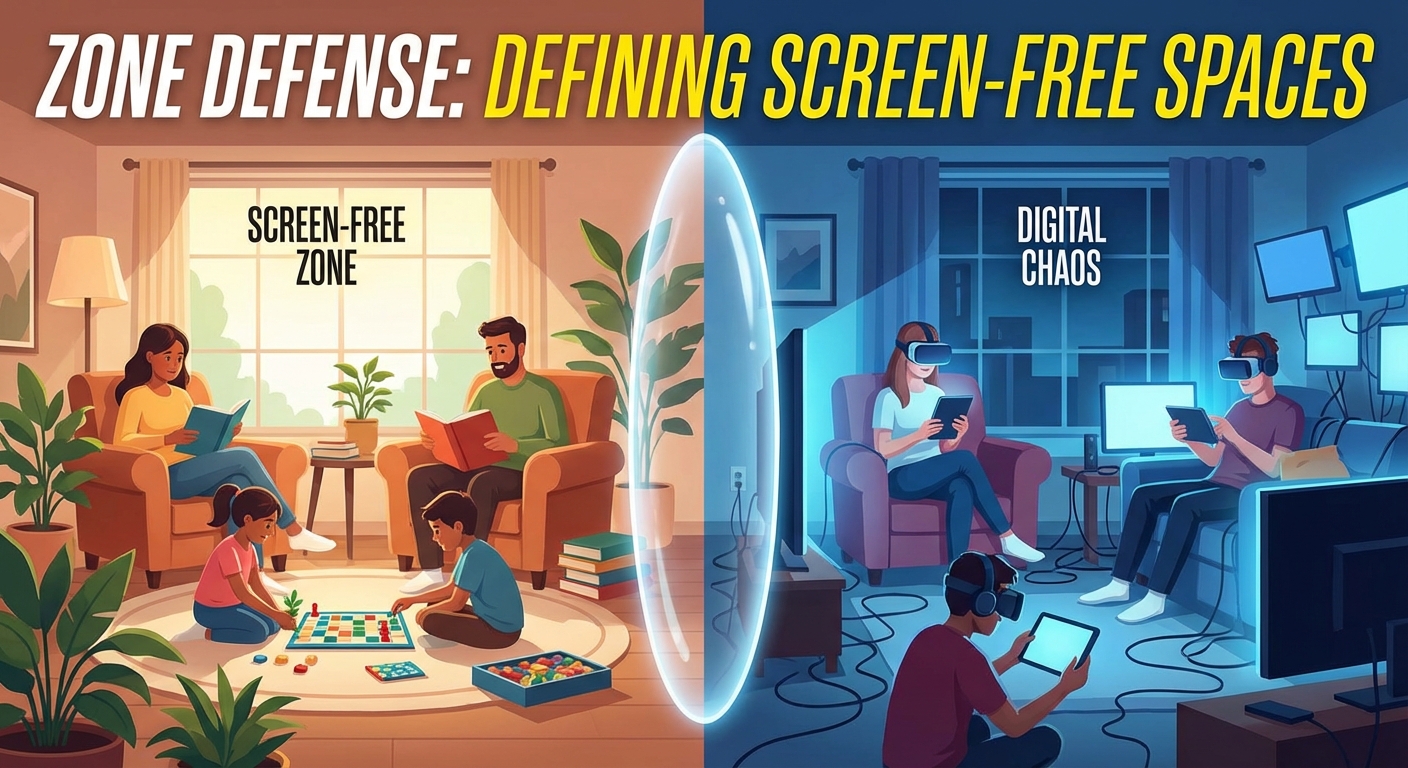
The easiest way to start a Tech Treaty is by defining "where," not "when."
Physical boundaries are easier to enforce than time boundaries.
If you walk into a certain room, the device stays out.
It’s simple and binary.
Here are the zones we negotiated in our home.
The Dining Table
This was non-negotiable for me.
Food is meant to be tasted.
Faces are meant to be seen.
We agreed that no phones, tablets, or even smartwatches are allowed at the table.
This applies to breakfast, lunch, and dinner.
If the phone rings? Let it ring.
If it’s urgent, they will call back.
Initially, this felt awkward.
We had forgotten how to just be without digital stimulation.
But within a week, the conversation returned.
The Bedroom Sanctuary
This was the hardest battleground.
My teenagers use their phones as alarm clocks.
They use them to listen to music to fall asleep.
However, the blue light was destroying their sleep cycles.
And the late-night notifications were ramping up anxiety.
We compromised.
We bought "old school" alarm clocks for everyone.
We bought simple Bluetooth speakers for music that can be controlled without a screen.
The rule is simple: Phones charge in the kitchen overnight.
No exceptions.
The quality of sleep in our house improved almost instantly.
Waking up without immediately scrolling set a calmer tone for the entire day.
Temporal Boundaries: Defining Screen-Free Times
Once the physical zones were set, we looked at the clock.
We didn't want to micromanage every minute.
We just wanted to protect specific, high-value times.
The Morning Rush
Mornings in our house used to be chaotic.
I was checking email while making toast.
The kids were checking snaps while looking for socks.
We were reactive, not proactive.
The Treaty states: No screens until you are fully ready for the day.
That means dressed, fed, teeth brushed, and bag packed.
Only then can you check your device.
This one change eliminated 50% of our morning yelling.
The Golden Hour
We designated one hour in the evening as "Family Downtime."
Usually, this is right after dinner.
This isn't forced "family fun time."
We don't have to play a board game (though sometimes we do).
We can read.
We can walk the dog.
We can just hang out.
The only rule is no screens.
It forces us to decompress naturally.
It allows our brains to bore, which is actually where creativity comes from.
The "Parents Go First" Clause
This is the section that will make or break your treaty.
You cannot lead from the rear on this one.
If I tell my son he can't have his phone at the table, but I take a "quick work call," the Treaty is void.
Children are hypocrisy radars.
They will detect a double standard from a mile away.
Radical Accountability
I had to be honest with my family.
I told them, "My work is demanding, and I struggle to disconnect."
"I need your help to keep me accountable."
We added a clause: Kids can call out parents.
If I bring my phone into a screen-free zone, my daughter is allowed to tell me to put it away.
And I have to listen.
I have to apologize and comply.
This empowers them.
It shows them that we are a team working toward a common goal.
It also shows them that managing technology is a lifelong skill, not just a rule for kids.
Handling Breaches and Adjustments
Will people slip up?
Absolutely.
I forgot and walked into the bedroom with my phone on day three.
My son tried to sneak a text under the dinner table last week.
The Treaty needs an enforcement mechanism, but it shouldn't be draconian.
The Tech Basket
We have a basket in the kitchen.
If you breach the Treaty, your device goes in the basket.
It’s not for a week.
It’s just for the duration of that specific activity.
If you text at dinner, the phone goes in the basket until dinner is over.
It’s a "reset," not a punishment.
We keep the tone light.
"Oops, violation! In the basket it goes."
The Monthly Review
Technology changes.
Schedules change.
A Treaty shouldn't be set in stone forever.
We agreed to review our rules once a month.
Maybe the morning rule is too hard during exam week.
Maybe we want to relax the car ride rules for long trips.
This review session gives the kids a voice again.
It allows them to renegotiate.
It keeps the agreement living and breathing.
Finding the Joy in Missing Out (JOMO)
The goal of the Family Tech Treaty isn't to demonize technology.
We love our devices.
We love the convenience, the entertainment, and the connection they provide.
The goal is to put technology back in its place.
It should be a tool we use, not a master that uses us.
Since implementing our Treaty, the change has been subtle but profound.
We make more eye contact.
We laugh more.
We are more aware of each other’s moods.
We have reclaimed the whitespace in our lives.
It turns out, we didn't need new apps or faster wifi.
We just needed each other.
So, grab a piece of paper.
Order a pizza.
Sit down with your people.
And write your own treaty.
It might just be the most important document your family ever signs.