There is something primal about looking up at the night sky.
For thousands of years, humans have tracked the stars.
But in our lifetime, the game has changed.
We aren’t just looking at ancient constellations anymore.
We are watching history fly overhead at 17,500 miles per hour.
I remember the first time I realized that the bright "star" moving steadily across the horizon wasn't a star at all.
It was the International Space Station (ISS).
It was a football-field-sized laboratory with humans living inside it.
And I saw it from my driveway, next to my garbage cans.
You don't need a PhD in astrophysics to enjoy this hobby.
You don’t even need a telescope.
You just need to know when to look and where to look.
Here is how I turn my backyard into a front-row seat for the space age.
The Magic of the International Space Station
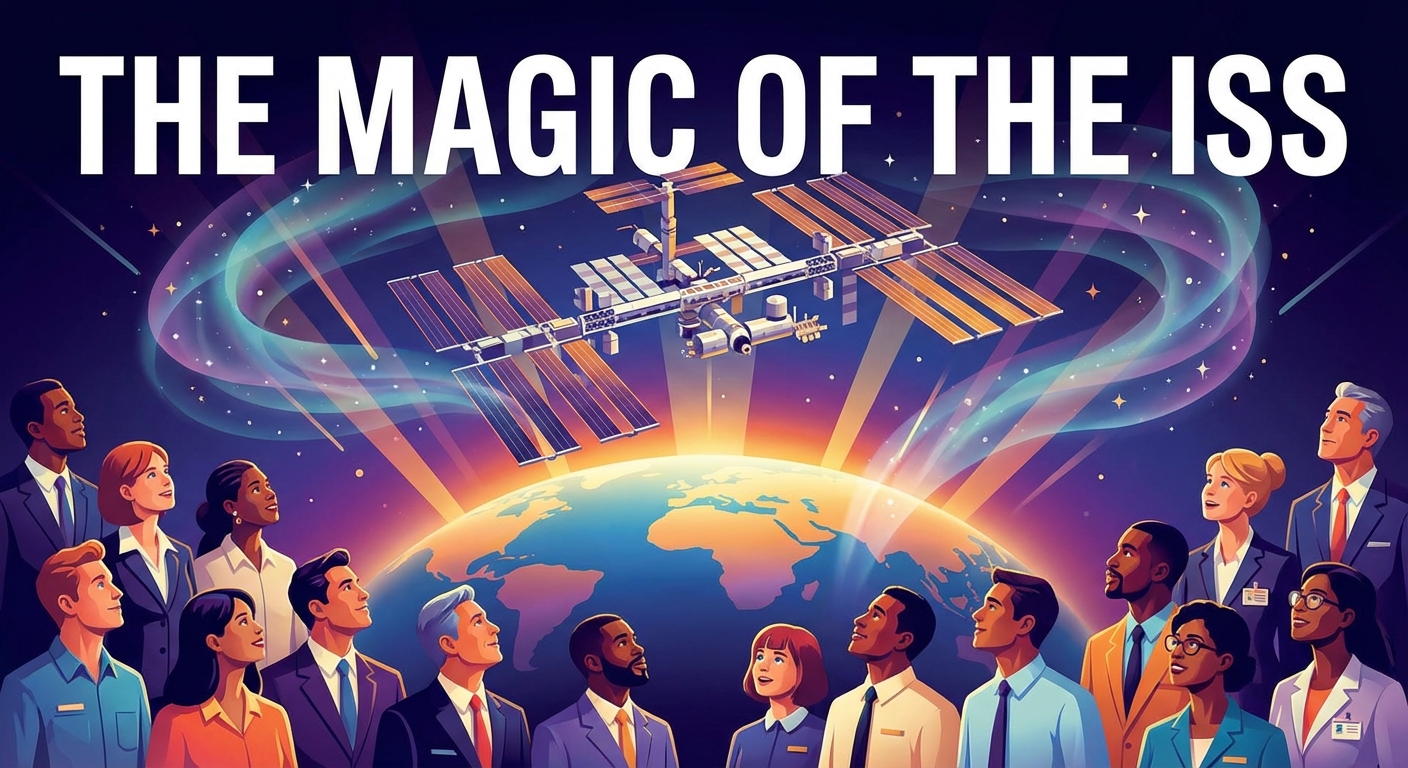
Before we get into the "how-to," let’s talk about what we are actually seeing.
The ISS is arguably the coolest thing humans have ever built.
It is a massive structure orbiting Earth roughly every 90 minutes.
Because it is so huge and covered in reflective solar panels, it acts like a giant mirror.
It catches sunlight and bounces it back down to us.
Why It Looks So Bright
To the naked eye, the ISS looks like an incredibly bright star.
It is often brighter than Venus or Sirius.
But unlike a plane, it doesn’t blink.
There are no red or green navigation lights pulsing on the wings.
It is a steady, piercing white light gliding silently across the black canvas of space.
The Speed Factor
The station is moving fast.
Really fast.
It crosses the entire sky in just a few minutes.
When you spot it, you have a very short window to appreciate it.
That fleeting nature is part of what makes catching it so exciting.
You know that for those three or four minutes, you are connected to the few people currently leaving the planet.
How to Spot the Station Like a Pro
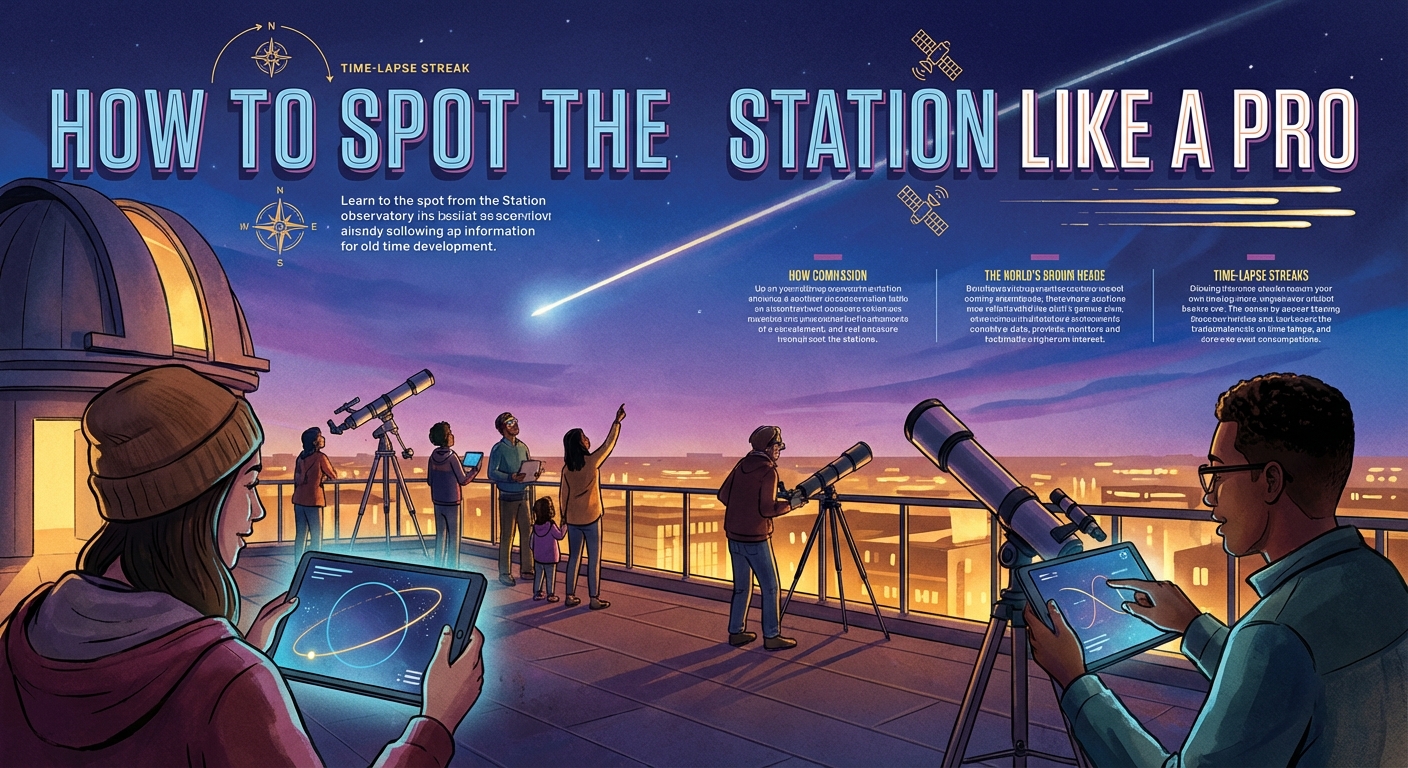
Finding the ISS used to be a matter of luck.
Now, we have technology in our pockets that makes it effortless.
I have tried a dozen different methods, but I keep coming back to a few reliable tools.
NASA’s Spot the Station
This is the gold standard.
NASA has a dedicated website called "Spot the Station."
You simply type in your town or city.
It gives you a list of upcoming "sighting opportunities."
It tells you exactly what time it starts, how long it lasts, and the maximum height.
I recommend signing up for their email alerts.
They only email you when there is a "good" sighting—one that is high in the sky and easy to see.
The Best Apps for Tracking
If you want real-time data, you need an app.
My personal favorite is ISS Detector.
It uses your phone's compass and GPS.
When the alarm goes off, you hold your phone up to the sky.
On the screen, an arrow points you exactly where to look.
It takes all the guesswork out of the equation.
Another great option is Sky Guide.
It is a broader astronomy app, but its satellite tracking is beautiful.
It visualizes the station's path over a map of the Earth.
Understanding "Max Height"
When you look at these schedules, you will see a metric called "Max Height" or "Elevation."
This is measured in degrees.
0 degrees is the horizon.
90 degrees is directly overhead.
If a pass is listed at 10 degrees, skip it.
It will likely be blocked by trees or your neighbor’s roof.
I aim for passes that are 40 degrees or higher.
These are the spectacular ones that fly high and bright.
Chasing Rockets: The New Backyard Hobby

Watching the ISS is peaceful and predictable.
Watching a rocket launch is dynamic and thrilling.
With the frequency of launches from companies like SpaceX, this is becoming a weekly event for many.
Depending on where you live, you can see these launches from hundreds of miles away.
The "Space Jellyfish" Phenomenon
Have you ever seen a photo of a glowing, nebulous cloud in the night sky?
That is often called the "Space Jellyfish."
This happens during twilight launches—either just after sunset or just before sunrise.
Here is the physics behind the beauty.
Down on the ground, it is dark.
But as the rocket climbs high into the atmosphere, it re-enters the sunlight.
The exhaust plume expands in the vacuum of space and catches those high-altitude sun rays.
The result is a spectacular, glowing bubble that looks alien.
If you catch a launch during this window, it is unforgettable.
Knowing Where to Look
I live quite a distance from the coast, but I can still see launches from Florida.
You need to know the trajectory.
Launches heading to the ISS usually fly Northeast along the US East Coast.
This means people from the Carolinas all the way to New England can often see the rocket climbing.
Launches putting satellites into polar orbit often fly South.
Check the launch mission profile before you head outside.
Reliable Launch Schedules
You can't just look up and hope for a rocket.
Delays are common in this industry.
"Scrubbing" a launch happens all the time due to wind or technical issues.
I rely on the Spaceflight Now website for schedules.
They keep an up-to-date calendar of global launches.
For apps, Next Spaceflight is my core pick.
It sends push notifications for launch countdowns and, crucially, notifies you of scrubs.
There is nothing worse than standing in the freezing cold for a rocket that isn't flying.
The Gear You Need (and What You Don't)
This is My Core Pick, so we have to talk about gear.
The beauty of satellite spotting is the low barrier to entry.
However, a few key items can improve the experience significantly.
Binoculars vs. Telescopes
Here is a counter-intuitive tip.
Do not use a telescope for the ISS or rockets.
Telescopes have a very narrow field of view.
Because the ISS moves so fast, it is nearly impossible to keep it in the viewfinder of a telescope manually.
You will just see a blur of motion.
Instead, use a good pair of binoculars.
I recommend a standard 10x50 pair.
They are wide enough to find the target easily but strong enough to resolve details.
With good binoculars, you can actually make out the "H" shape of the ISS solar panels.
The Creature Comforts
The biggest enemy of stargazing is discomfort.
If you are cold or your neck hurts, you won’t stay out long.
I keep a "go-bag" by the back door for night passes.
It contains a zero-gravity lawn chair.
Leaning back is much better than craning your neck for six minutes.
I also pack a red-light flashlight.
White light from your phone ruins your night vision.
It takes your eyes about 20 minutes to fully adjust to the dark.
A red light lets you see where you are walking without resetting your eyes.
Bug Spray and Layers
It sounds basic, but it matters.
In the summer, mosquitoes will eat you alive if you are standing still in the dark.
In the winter, standing on concrete sucks the heat right out of your feet.
Wear thick wool socks.
If you are comfortable, you will enjoy the silence and the spectacle much more.
Capturing the Moment: Smartphone Astrophotography
You will want to take a picture.
It is a natural instinct.
But taking a picture of a moving light at night is tricky.
If you just point and shoot, you will get a black square.
Here is how to get a decent shot with just your phone.
Use Night Mode
Almost all modern smartphones have a dedicated "Night Mode."
Turn this on.
It takes a long exposure, gathering light over several seconds.
The Importance of Stability
You cannot hold the phone in your hand.
Even your heartbeat will shake the camera enough to blur the shot.
You need a tripod.
It doesn’t have to be expensive.
A cheap, flexible tripod that wraps around a fence post works wonders.
If you don't have one, lean your phone against a rock or a shoe on the ground.
The 3-Second Timer
Here is the secret sauce.
Set a 3-second timer on your camera shutter.
When you tap the screen to take the photo, you inevitably shake the phone.
The timer gives the phone a moment to settle before the shutter opens.
For the ISS, a long exposure (10 to 30 seconds) will create a streak of light across the sky.
It looks like a laser beam cutting through the stars.
For rockets, the same technique captures the arc of the ascent.
Final Thoughts: Keep Looking Up
We spend so much of our lives looking down.
We look at our phones, our keyboards, and the pavement.
But there is a whole other world happening just above our heads.
Spotting the ISS is a reminder of human ingenuity.
It is a reminder that we are capable of working together to do impossible things.
Watching a rocket pierce the atmosphere reminds us that we are still explorers.
So, download an app.
Check the weather.
Grab a warm coat and step into the backyard.
Wait for that silent, bright light to rise over the trees.
I promise you, it never gets old.
Clear skies, everyone.