Here is the blog post, written in the requested style and format.
Beyond the Hype: What the Future of AI Really Looks Like
If you’ve opened your phone in the last twelve months, you’ve been bombarded.
Headlines about ChatGPT replacing writers.
Fears about robots taking over factory floors.
Endless threads on X (formerly Twitter) about the "Top 10 AI Tools You Need Right Now."
It is exhausting.
At My Core Pick, we spend a lot of time sifting through the noise to find what actually matters.
And honestly? I think we are currently stuck in the "shiny toy" phase of Artificial Intelligence.
We are obsessed with the novelty of a computer writing a poem or generating a picture of a cat in space.
But novelty fades.
The real revolution isn't about what AI can do to amuse us.
It’s about what happens when the hype dies down and the technology disappears into the background of our lives.
Here is what I believe the future actually looks like, stripped of the marketing buzzwords.
1. The Era of "Invisible" AI
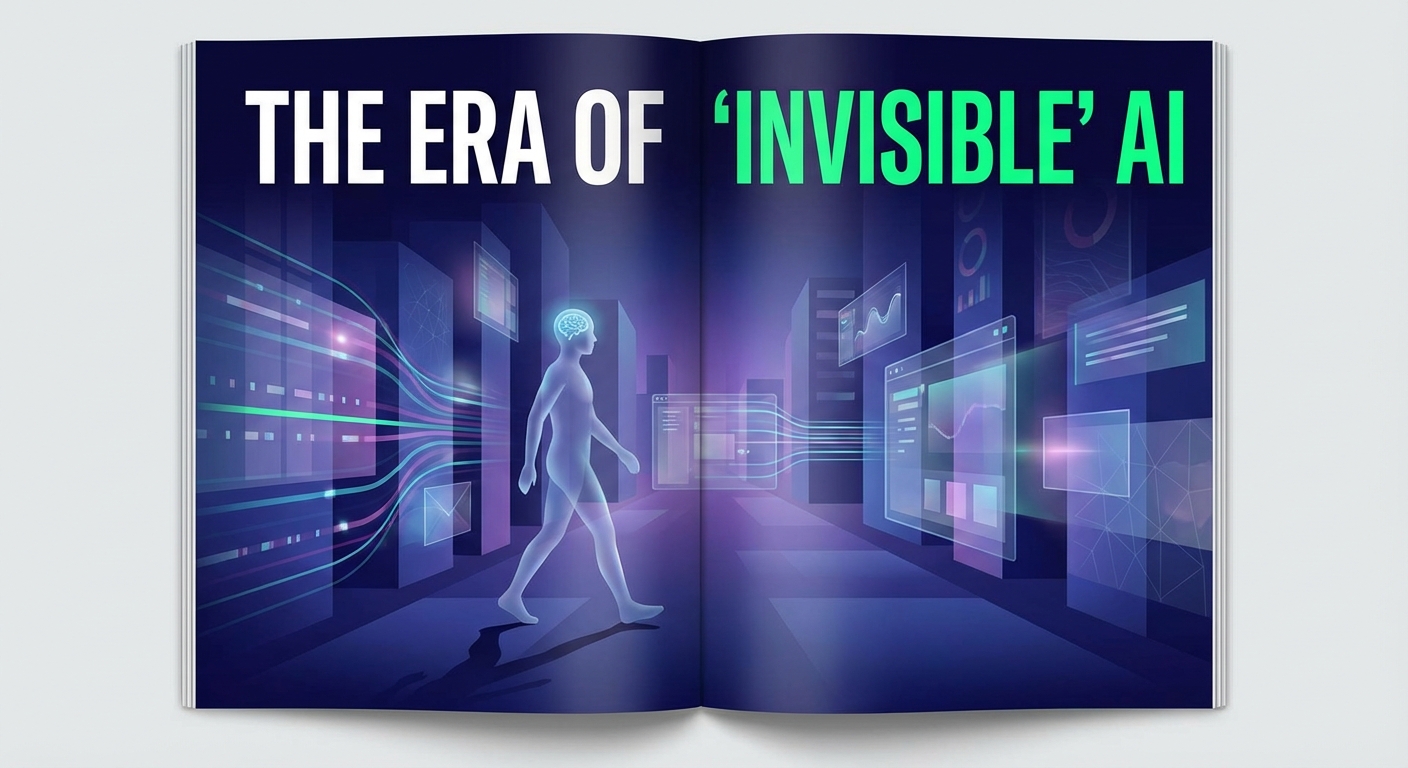
Right now, using AI is a deliberate act.
You have to open an app.
You have to type a prompt.
You have to wait for a response.
That is too much friction for the average person to deal with forever.
The future of AI isn't a chatbot you talk to; it’s an infrastructure you rely on without realizing it.
No More Prompt Engineering
We keep hearing that "prompt engineering" is the job of the future.
I disagree.
I believe that is a temporary stopgap.
In the near future, the AI will understand context so well that you won’t need to be a "whisperer" to get a good result.
It will just understand you.
Imagine opening your word processor, and it already knows the tone you use for weekly reports because it has read your last fifty emails.
You won't ask it to "write in a professional tone."
It will simply nudge you when you are being too casual.
The Ambient Assistant
Think about electricity.
You don't walk into a room and marvel at the fact that the lights turn on.
You just flip the switch.
AI will become that utility.
Your calendar will automatically reschedule meetings when your flight is delayed.
Your fridge will order milk because it knows your consumption patterns, not because you told it to.
We are moving from "Artificial Intelligence" to "Ambient Intelligence."
2. Hyper-Personalization: The End of Average
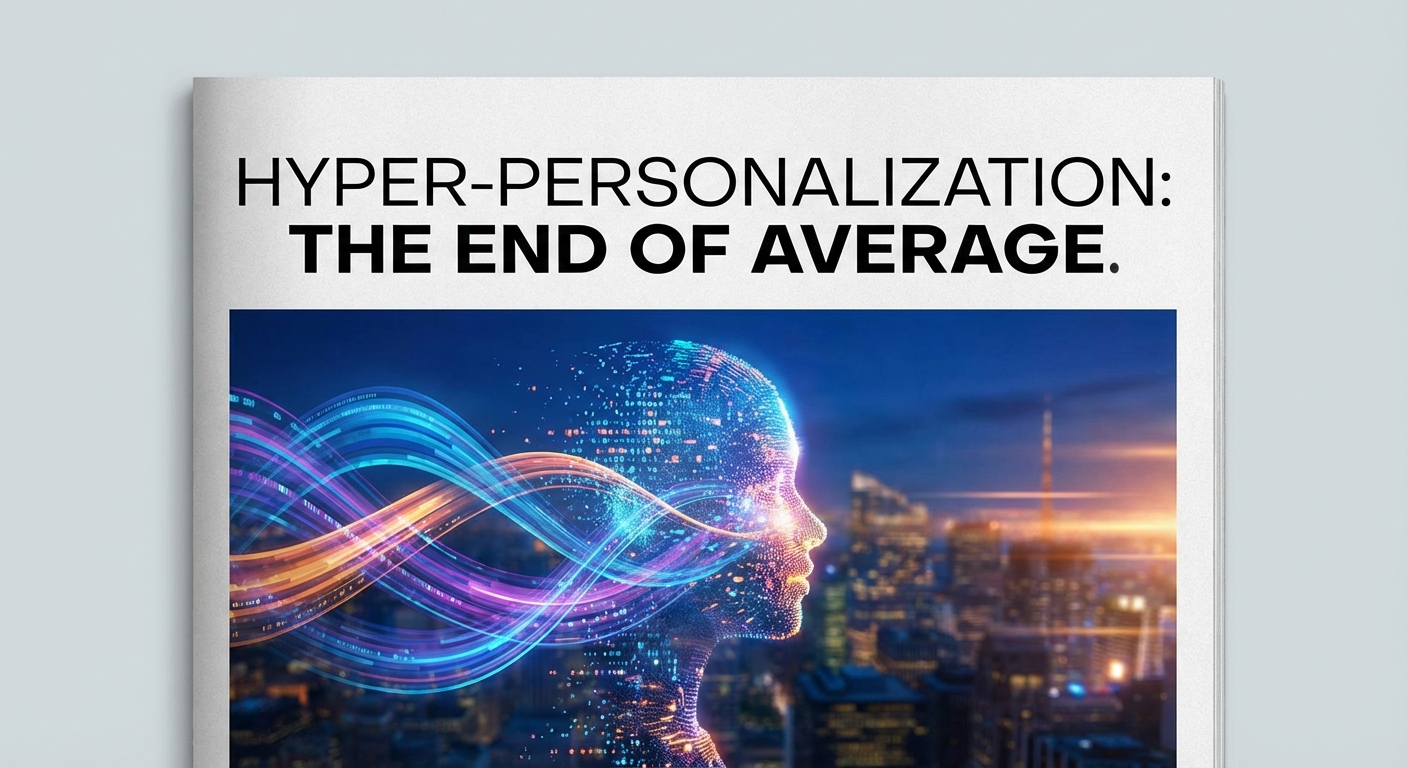
This is the part that excites me the most.
For the last century, everything has been built for the "average" person.
Standardized testing in schools.
One-size-fits-all medical dosages.
Mass-market advertising.
AI destroys the bell curve.
It allows for a world customized to the individual, instantly and at scale.
Education of One
I often think about how many brilliant minds were lost because they didn't learn the way the teacher taught.
In the future, every student will effectively have a heavily personalized tutor.
If a child loves Minecraft but hates math, the AI will generate geometry problems based on building blocks.
If a student is visual, the textbook becomes a video.
If they are textual, the video becomes a transcript.
We aren't just automating teachers; we are unlocking human potential that was previously ignored.
Precision Healthcare
This is already starting, but it’s going to get wild.
Currently, if you have high blood pressure, you get the same pill as my grandfather.
But your biology is unique.
Future AI models will analyze your genome, your lifestyle, and your real-time biometrics.
They will simulate how a drug reacts to your specific body before you ever swallow a pill.
We are moving from reactive sick-care to predictive health-care.
Your smartwatch won't just count steps.
It will tell you that you are getting the flu two days before you feel a fever.
3. The Workforce: Co-Pilots, Not Replacements
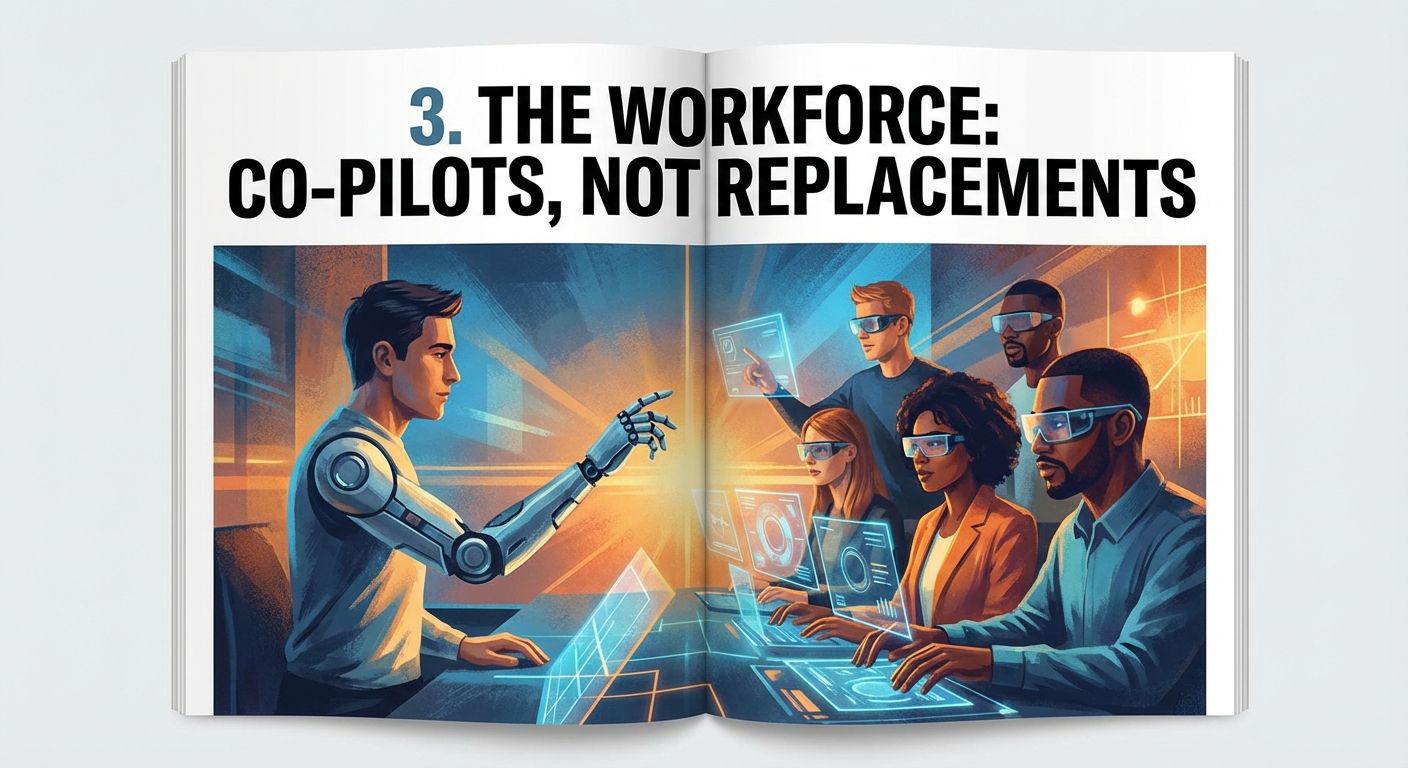
Let’s address the elephant in the room.
Will AI take our jobs?
Yes, some of them.
But I believe the narrative of "mass unemployment" is overblown hype.
History shows us that technology rarely eliminates work; it changes the nature of work.
The Death of Drudgery
Think about the parts of your job you hate.
Data entry.
Scheduling.
Summarizing long meetings.
Searching through folders for that one PDF.
This is what AI is coming for.
It is coming for the tasks, not the roles.
By outsourcing the drudgery to an algorithm, we free up our brains for high-level strategy.
The Premium on Human Connection
Here is the irony of the AI age.
As content becomes cheap and abundant, human connection becomes a luxury good.
If an AI can write a perfect blog post, the value of that post drops to zero.
But the value of a unique, human perspective skyrockets.
We will start to crave things that are undeniably human.
Handmade crafts.
In-person consultation.
Opinion pieces rooted in messy, real-life experience.
In a world of synthetic perfection, our flaws and our empathy become our greatest assets.
I believe we will see a resurgence in trades, caregiving, and the arts—areas where the "human touch" is the product itself.
4. The Reality Check: Hurdles We Can't Ignore
I don't want to paint a utopia here.
At My Core Pick, we value realism.
The road ahead is bumpy, and there are massive hurdles we need to clear before we reach this "invisible" future.
The Trust Deficit
We are already seeing this with deepfakes.
When you can’t believe your eyes or ears, society gets shaky.
The future will require a new layer of verification.
Digital watermarks.
Blockchain verification for video content.
We are going to have to relearn how to consume media.
Skepticism will become a survival skill.
The Energy Crisis
AI is hungry.
Training a single large model consumes a massive amount of electricity and water for cooling.
As we integrate AI into every phone and toaster, our energy demands will explode.
The future of AI is inextricably linked to the future of clean energy.
We cannot have one without the other.
If we don't solve the hardware efficiency problem, the AI revolution will stall out due to environmental costs.
The Echo Chamber Effect
If AI gives us exactly what we want, when we want it, we risk isolating ourselves.
If my news feed is perfectly curated by an AI to agree with my worldview, I never learn to compromise.
We have to be careful that personalization doesn't turn into polarization.
Software developers have a moral obligation here.
They need to program serendipity and opposing viewpoints into the algorithms.
5. How You Can Prepare Right Now
So, where does this leave us?
You don't need to learn how to code Python (unless you want to).
But you do need to shift your mindset.
Here is what I am doing, and what I recommend to our readers.
Become a Generalist
Specialization is for insects—and algorithms.
AI is great at deep, narrow tasks.
Humans are great at connecting dots between unrelated fields.
Read widely.
Learn about history, psychology, and art.
The more diverse your mental database, the better you will be at directing the AI.
Sharpen Your Critical Thinking
Don't accept the output blindly.
Treat AI like a very fast, very confident intern who is occasionally drunk.
It makes mistakes.
It hallucinates facts.
Your value lies in your ability to audit the work, not just generate it.
Edit ruthlessly.
Fact-check everything.
embrace Adaptability (AQ)
We talk about IQ (Intelligence Quotient) and EQ (Emotional Quotient).
Now, you need AQ: Adaptability Quotient.
The tools will change every six months.
Don't get married to one workflow.
Be willing to unlearn how you did things yesterday to utilize the tools of tomorrow.
Final Thoughts
The hype cycle will eventually crash.
The venture capital money will dry up for the gimmicky startups.
But the tech is here to stay.
The future of AI isn't about robots conquering the world.
It is about software finally becoming smart enough to actually help us.
It’s about removing the friction between your idea and the execution of that idea.
It’s scary, sure.
Change always is.
But if we navigate this correctly, we aren't looking at a future where humans are obsolete.
We are looking at a future where humans are supercharged.
Stay curious.
Stay human.
And as always, keep following My Core Pick as we navigate this brave new world together.