It feels like we can’t go five minutes without hearing about the next "revolutionary" AI tool.
Every time I open social media, someone is screaming about how ChatGPT just killed another industry.
Or how we are all roughly six months away from living in a sci-fi utopia (or dystopia, depending on who you ask).
It is exhausting.
The hype cycle is spinning so fast that it is becoming impossible to separate the signal from the noise.
But here at My Core Pick, we like to take a step back.
We want to look past the flashy headlines and the viral threads.
What happens when the dust settles?
What does our daily life actually look like five or ten years from now, once the novelty wears off?
The future isn't about asking a chatbot to write a poem.
It is about something much deeper, much quieter, and much more impactful.
Let's dive into what the future of AI actually looks like.
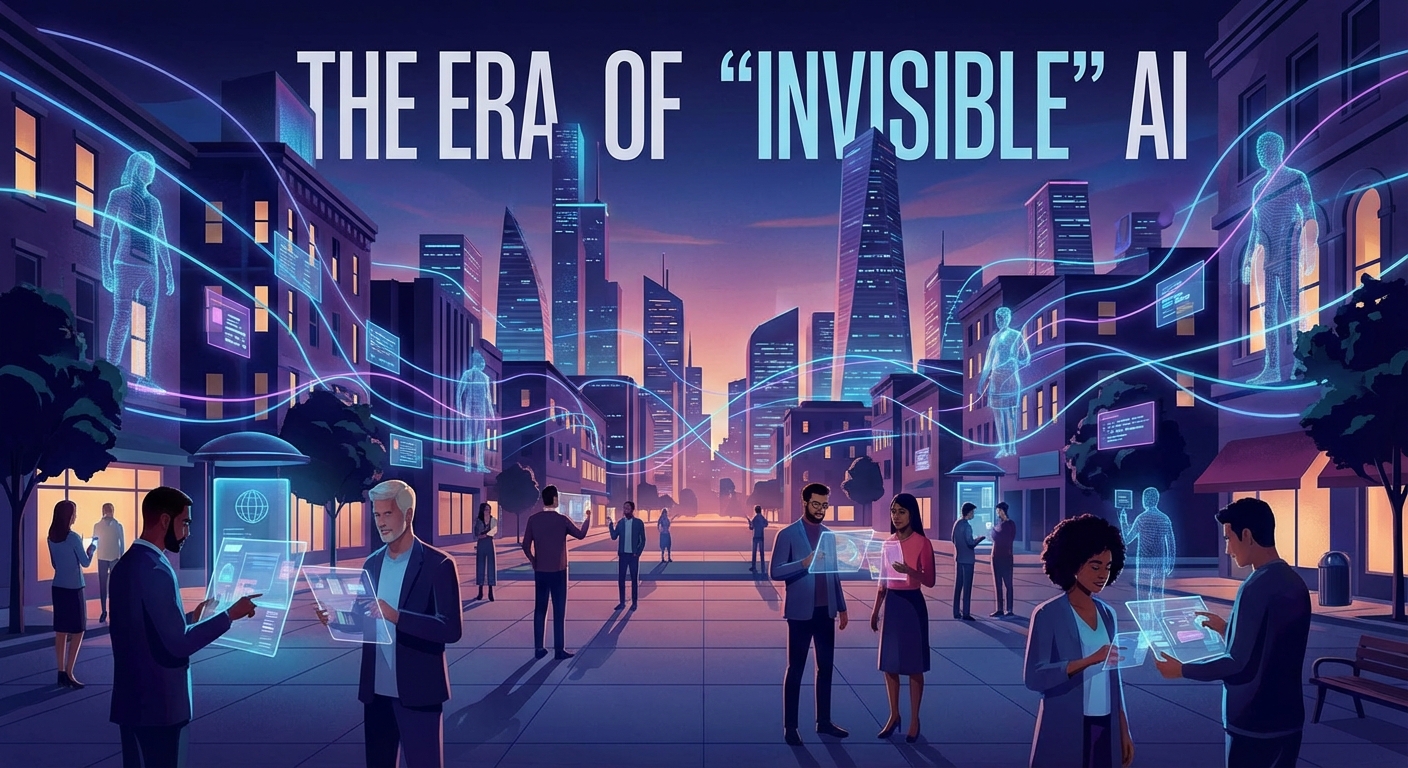
The Era of "Invisible" AI
Right now, using AI is a deliberate act.
You have to open an app, log in, type a prompt, and wait for an answer.
It is a distinct activity, separate from the rest of your work.
I believe this is going to change completely.
In the very near future, AI will disappear into the background.
It will become infrastructure, just like electricity or the internet.
You don't think about "using the internet" when you stream a movie; you just watch the movie.
The end of the prompt engineer
We are currently obsessed with "prompt engineering."
We treat it like a secret spell language that unlocks magic.
But history shows us that technology always evolves to become easier for humans, not harder.
I predict that within a few years, prompt engineering will be obsolete.
AI models will become intuitive enough to understand intent without specific syntax.
They will understand context, history, and nuance without you needing to explain it.
The interface will stop being a text box and start being you.
The operating system of life
Imagine your calendar, email, and project management tools actually talking to each other.
Not through clunky integrations, but through a unified intelligence.
If I get an email about a meeting, my AI should logically know to block that time.
It should also pull up the relevant documents I need for that meeting.
It might even draft an agenda based on my previous conversations with that client.
All of this will happen without me clicking a single button.
That is the invisible future: AI that acts as the connective tissue of our digital lives.
From Chatbots to Autonomous Agents
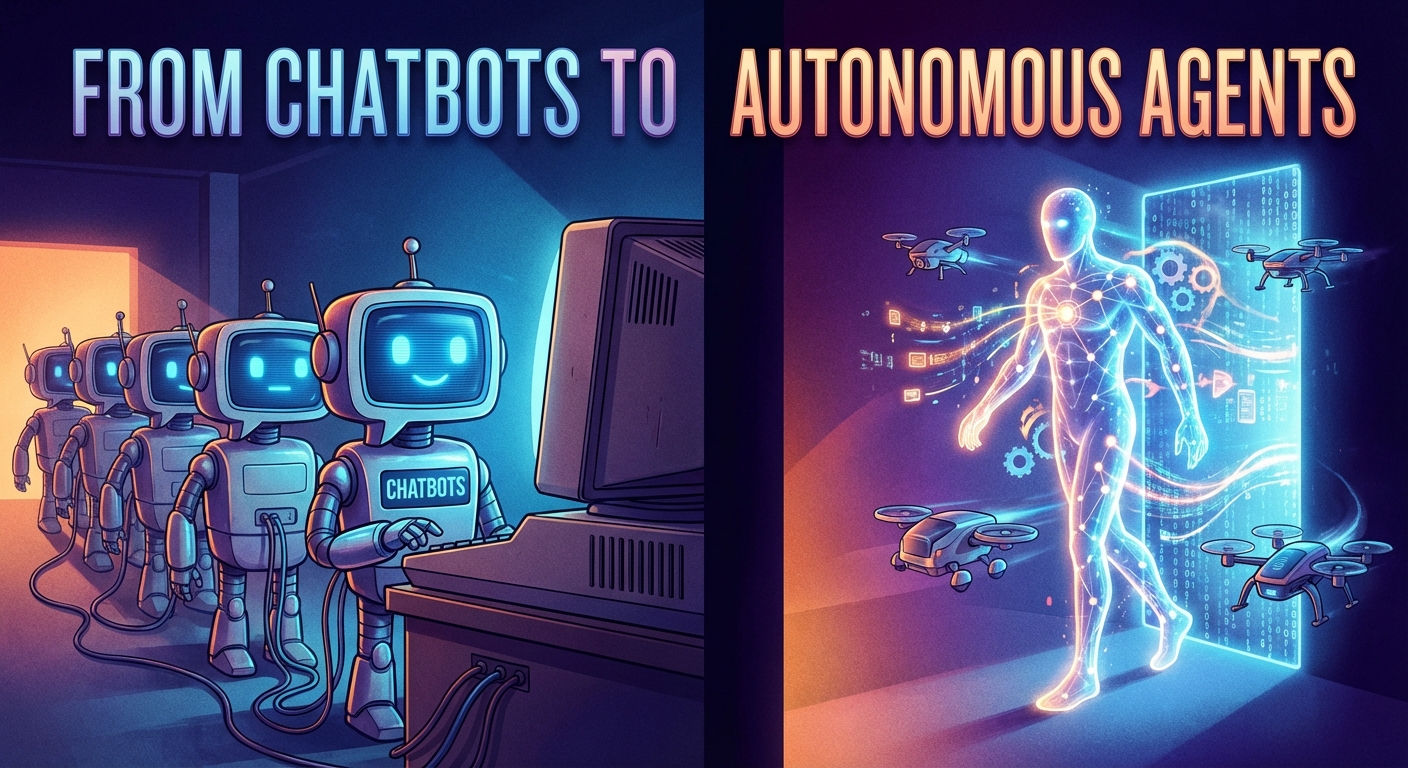
If 2023 was the year of the Chatbot, 2025 and beyond will be the era of the Agent.
Right now, AI is passive.
It waits for you to give it a command.
It answers, and then it goes back to sleep.
The future lies in "agency"—AI that can take action on your behalf.
The rise of the "Do-er"
I am incredibly excited about this shift.
We are moving toward AI that can actually do things, not just say things.
Imagine telling your AI, "Plan a trip to Tokyo for me in May, under $3,000."
Currently, a chatbot would give you an itinerary and maybe some flight links.
An Agent will actually go to the websites.
It will book the flights.
It will reserve the hotels.
It will add the dates to your calendar and email you the confirmation codes.
It moves us from information retrieval to task execution.
Multi-step reasoning
This requires a massive leap in what we call "reasoning."
The AI has to understand that if the flight is delayed, the hotel check-in needs to change.
It needs to troubleshoot problems without asking you for help every step of the way.
We are already seeing early versions of this with tools like AutoGPT.
But soon, this will be built into your phone’s operating system.
You will have a personalized Chief of Staff in your pocket, handling the logistics of your life while you focus on the creative work.
The "Centaur" Model of Employment
This is the scary part for a lot of people.
We all worry about our jobs.
Will I be replaced by a script?
While displacement is inevitable in some sectors, I don't buy the "end of work" narrative.
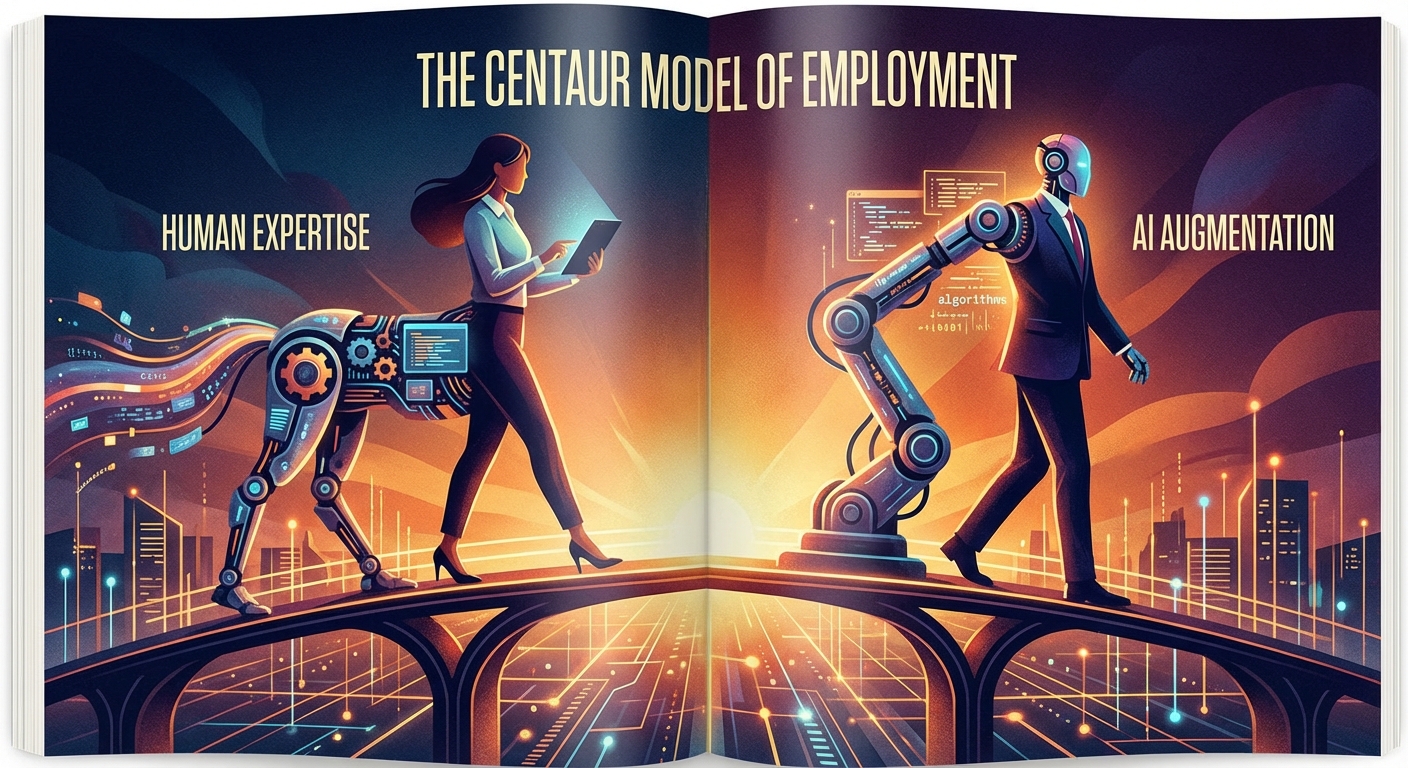
Instead, I see a future defined by the "Centaur" model.
Humans and machines working together
In chess, a "Centaur" is a team consisting of a human player and an AI computer.
Historically, Centaurs have been able to beat both solo humans and solo computers.
The human provides the strategy and intuition.
The computer provides the calculation and tactical execution.
I believe this is exactly what the professional world will look like.
Designers won't stop designing.
But they will use AI to generate 50 variations of a concept in minutes, then use their taste to curate and refine the best one.
Coders won't stop coding.
But they will act more like architects, overseeing code written by AI to ensure it is secure and efficient.
The premium on "Soft Skills"
As technical barriers drop, human skills go up in value.
When anyone can write a decent email or generate a competent report, "decent" and "competent" become commodities.
What becomes rare?
Empathy.
Leadership.
Strategic thinking.
The ability to negotiate and navigate complex office politics.
These are things AI cannot simulate effectively.
In the future job market, being the person who can connect dots and manage relationships will be more valuable than being the person who can crank out words per minute.
Hyper-Personalized Education and Healthcare
If we look outside the corporate world, the impact becomes even more profound.
I truly believe AI will level the playing field in education and medicine.
We are looking at a shift from "one-size-fits-all" to "one-size-fits-one."
The 2 Sigma Problem
There is a famous educational concept called Bloom's 2 Sigma Problem.
It states that an average student who receives one-on-one tutoring performs two standard deviations better than students in a traditional classroom.
That is a massive difference.
Basically, tutoring turns average students into top performers.
The problem has always been cost.
We can't afford a human tutor for every child on earth.
But we can afford an AI tutor.
Imagine a tutor that knows exactly how your child learns.
It knows they struggle with fractions but excel at geometry.
It can explain a history concept using analogies from their favorite video game.
It never gets tired, never gets frustrated, and is available 24/7.
This isn't just about better grades; it's about democratizing potential.
Precision Medicine
In healthcare, the implications are just as staggering.
Doctors today are overworked and overwhelmed with data.
AI can analyze medical records, genetic data, and lifestyle factors in seconds.
It can spot patterns that a human might miss.
I foresee a future where your "medical AI" constantly monitors your health data via wearables.
It won't just treat you when you are sick.
It will predict illness before it happens.
It will suggest diet changes or preventative screenings based on your specific biology.
This moves medicine from reactive to proactive.
The Trust Gap and the Verification Layer
Of course, we cannot talk about the future without talking about the risks.
The biggest challenge we face isn't rogue robots.
It is the collapse of truth.
The Deepfake dilemma
As AI content becomes indistinguishable from human content, trust will plummet.
We are already seeing this with deepfake videos and AI-generated news articles.
When you can't believe your eyes or ears, society gets shaky.
I predict that the next massive tech industry will be Verification.
We will need a "digital watermark" for everything.
Proof of Humanity
We might see a return to "analog" trust.
In a world of infinite digital noise, in-person connection becomes a premium product.
Live events, handshakes, and physical communities will become more valuable.
Online, we will likely use cryptographic methods to prove we are human.
Social media platforms will have to pivot.
They will move from "open squares" to "verified communities."
You might have to digitally sign your posts to prove they weren't generated by a bot farm.
Navigating this "Trust Gap" will be the defining cultural struggle of the next decade.
How to Prepare (Without Panicking)
So, what do you do with all this information?
If the future is invisible, agentic, and hyper-personalized, how do you fit in?
My advice is simple: Be curious, not defensive.
Stop fighting the tools
Don't be the person who refused to use email in the 90s.
Start experimenting with AI tools today.
Not because you need to become an expert engineer.
But because you need to understand the capabilities.
Learn what AI is good at (summarizing, brainstorming, coding).
And learn what it is bad at (nuance, fact-checking, empathy).
Cultivate your taste
With AI, the cost of creation is approaching zero.
We are about to drown in mediocre content.
The winners in this new world won't be the ones who can generate the most content.
They will be the ones with the best Taste.
Your unique perspective, your ability to curate, and your specific voice are your best assets.
AI can play the instrument, but you have to be the conductor.
The Final Verdict
The hype is loud, but the reality is going to be quieter and more profound.
We aren't heading toward a world where humans are obsolete.
We are heading toward a world where humans are amplified.
The friction of daily life—the scheduling, the searching, the organizing—is about to melt away.
That leaves us with more time.
The question is: What will you do with it?
At My Core Pick, we are betting on a future where technology empowers us to be more human, not less.
Stay curious.