Here is a blog post written specifically for the My Core Pick audience.
Old Tricks, New Screens: Using 20th-Century Propaganda to Spot Modern Manipulation
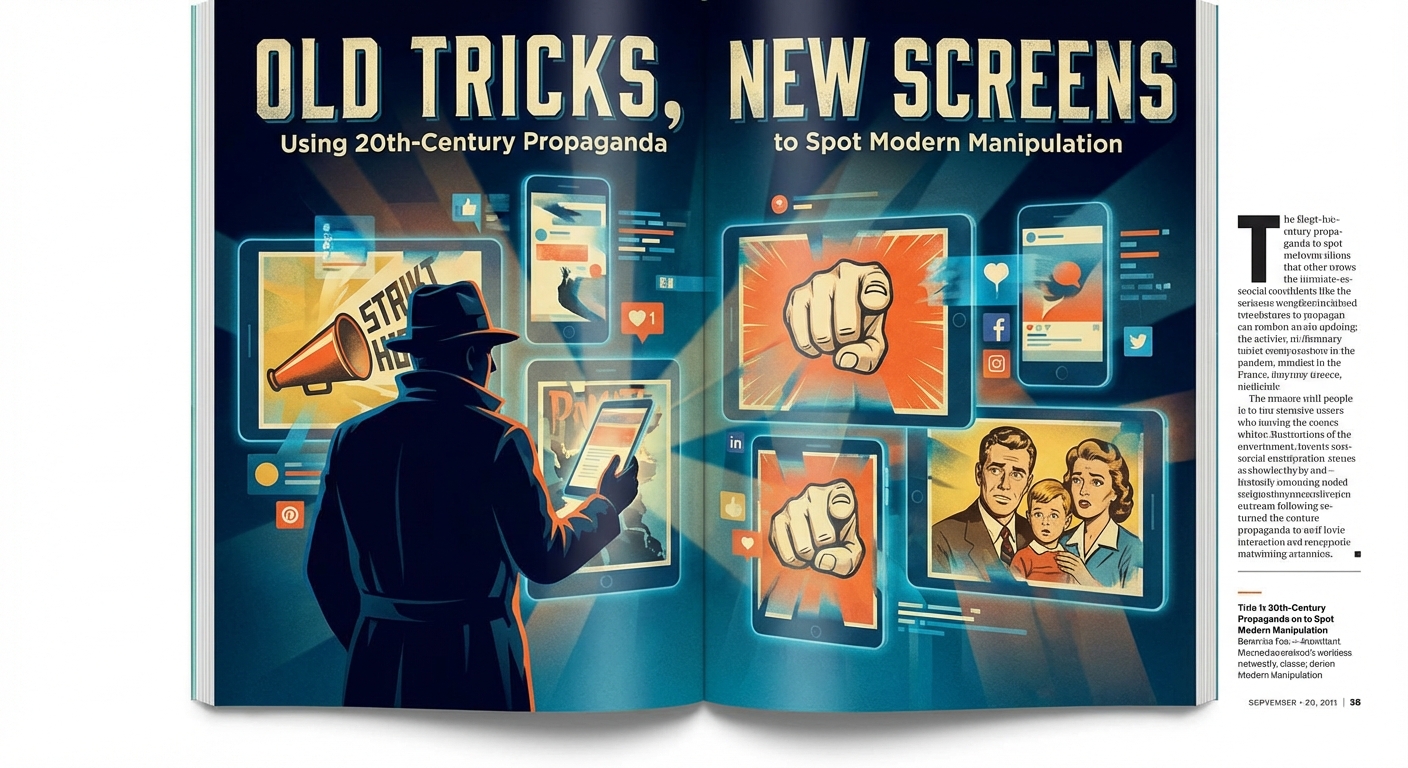
I was doom-scrolling the other night. You know the feeling.
My thumb was on autopilot, flicking upward through a chaotic mix of news, memes, and outraged comments.
Suddenly, I stopped on a post that made my blood boil.
I was ready to share it immediately. I wanted everyone to see how terrible this specific situation was.
But then I hesitated.
Something about the phrasing felt familiar.
I’m a history buff. I’ve spent hours studying the graphic design of the 20th century. specifically, the war posters of the 1940s and the Cold War era.
I realized that this modern tweet was using the exact same psychological architecture as a propaganda poster from 1942.
The medium had changed from paper to pixels. But the trick remained the same.
We often think we are too smart for propaganda. We think that belongs to a black-and-white past.
But the truth? We are swimming in it.
Let’s dig into the old tricks being used on your new screens, and how you can spot them.
The "Us vs. Them" Narrative
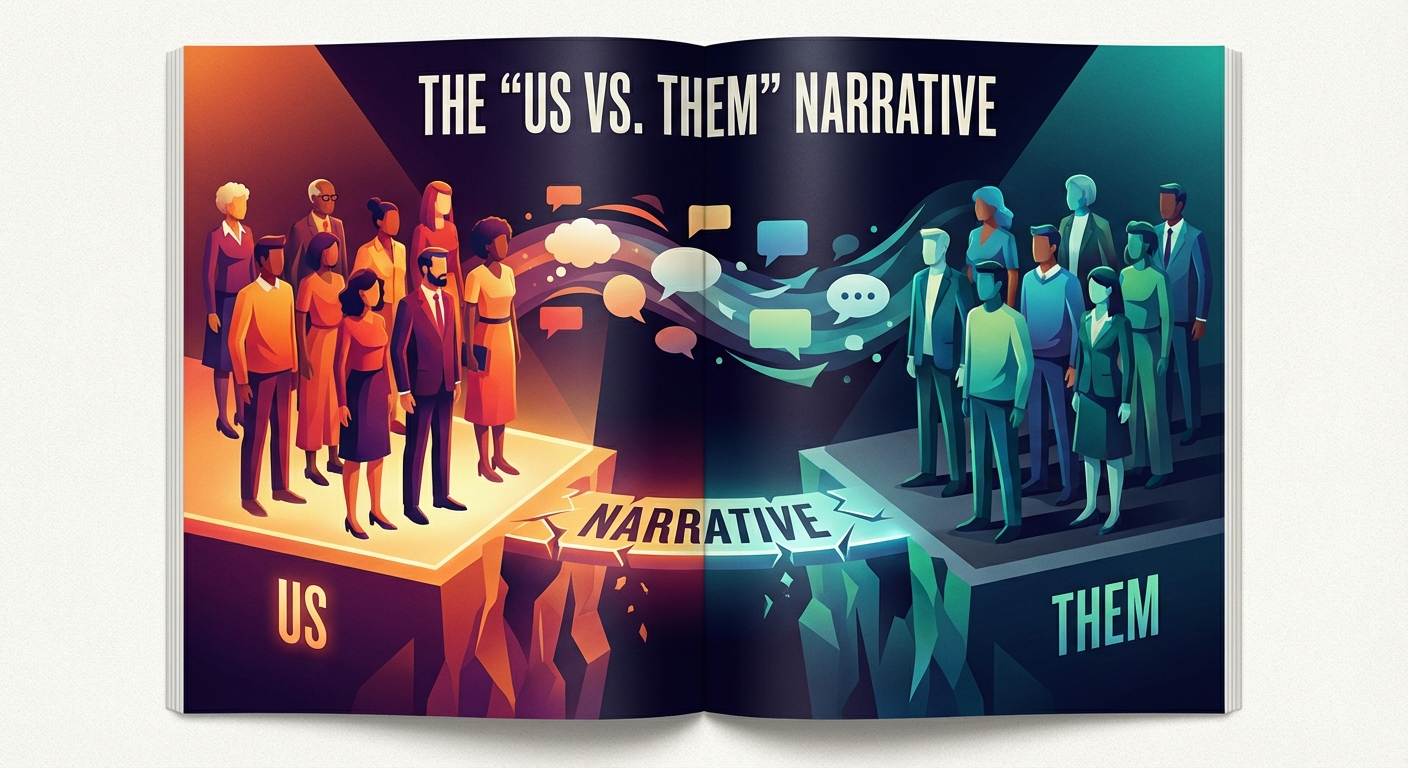
One of the oldest plays in the book is "Othering."
To make a population compliant or angry, you have to create a distinct enemy.
In the 20th century, this was done visually.
Think of those old wartime posters. The enemy was rarely depicted as human.
They were drawn as monsters, spiders, or shadowy figures with exaggerated features. They were coming for your home. They were coming for your family.
The goal was simple: Dehumanize the opposition so you don't feel bad about fighting them.
How It Looks Today
Today, we don’t usually see caricatures of monsters.
Instead, we see curated screenshots and "Rage Bait."
Social media algorithms are designed to show you the absolute worst version of the "other side."
If you lean politically left, you will be fed videos of the most unreasonable conservative person imaginable.
If you lean politically right, you will be shown the most extreme liberal taking.
The goal is still dehumanization.
It makes us say, "I can’t believe those people are so stupid/evil."
When you feel that intense separation—that feeling that the other side isn't just wrong, but sub-human—you are being manipulated.
The Bandwagon Effect
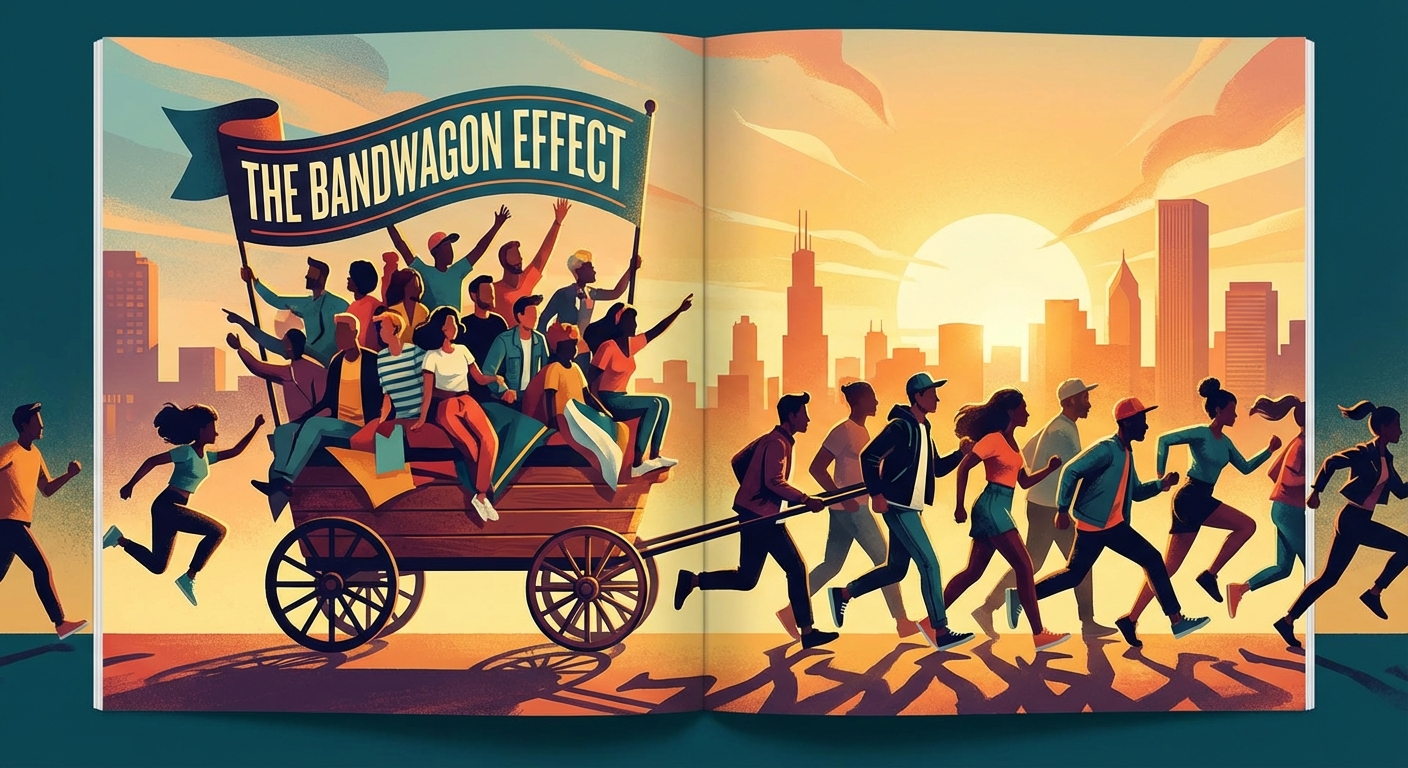
During both World Wars, governments needed money.
They sold War Bonds to finance the fight.
The marketing strategy was relentless. Posters showed massive crowds marching forward.
Slogans read, "Everyone is doing their part—are you?"
The psychological trigger here is the fear of missing out (FOMO) mixed with social pressure.
Humans are herd animals. We want to belong. We want to be on the winning team.
If the propaganda suggests that everyone agrees with a certain idea, we feel pressured to agree, too.
The Tyranny of the "Like" Button
In the digital age, the Bandwagon Effect is quantified.
It’s the "Like" count. It’s the "Retweet" number. It’s the "Trending" tab.
When we see a post with 200,000 likes, our brain automatically assigns it validity.
We think, "Well, 200,000 people can't be wrong."
(Spoiler: They absolutely can be.)
Modern influencers and bad actors use bot farms to artificially inflate these numbers.
They manufacture a bandwagon.
They create the illusion of consensus to trick you into hopping aboard.
If you find yourself believing something solely because it’s "viral," pause.
That is the 20th-century crowd psychology working on a 21st-century platform.
Appeal to Fear (The Alarmist)
Fear is the most powerful motivator in human history.
In the Cold War, the fear was nuclear annihilation.
It was the "Red Scare." It was the mushroom cloud.
Propaganda films showed maps of the country turning red, implying an unstoppable invasion.
The message was clear: "Be afraid, and do exactly what we say, or you will lose everything."
Fear bypasses logic. It goes straight to the lizard brain.
When we are scared, we look for a savior. We look for a strongman or a strict policy to protect us.
The Algorithm of Doom
Open up any news app right now.
Headlines aren't written to inform you; they are written to terrify you.
"Is this common household item killing you?"
"The economy is collapsing faster than we thought."
"Civil war is imminent."
Modern media manipulation relies on keeping your cortisol levels high.
When you are scared, you click more. You stay on the app longer to find safety information.
I call this "Doom-mongering."
If a piece of content makes you feel an immediate, sharp pang of terror about the future, it is likely trying to sell you something.
It might be selling a product, a political candidate, or just a subscription.
Recognize the fear as a tactic, not necessarily a reality.
The Firehose of Falsehood
This is a tactic that was perfected in the mid-20th century but was harder to execute back then.
The idea is to overwhelm the audience with so many conflicting narratives that they give up on finding the truth.
It’s not about convincing you of one lie.
It’s about telling you 50 different lies so that you stop trusting anything.
In the past, this required controlling all the newspapers and radio stations.
It took a lot of work and manpower.
The Infinite Scroll
Today, the internet makes the "Firehose" easy.
Bad actors can flood social media with noise.
One bot says an event happened. Another bot says it didn't. A third says it happened, but it was aliens.
We get overwhelmed.
We enter a state of "information fatigue."
We think, "I can't figure this out, so I'll just believe whatever feels good."
This is the ultimate goal of modern propaganda: Apathy.
If you feel exhausted and cynical, the manipulation has worked.
You’ve checked out, leaving the manipulators free to operate without scrutiny.
How to Defend Yourself
So, what do we do?
We can't just throw our phones in the ocean (tempting as that sounds).
At My Core Pick, we believe in curating our lives and our inputs.
Here is your defense strategy against modern propaganda.
1. The Emotional Audit
This is my number one rule.
When you read a headline or see a meme, check your gut.
Did it make you instantly angry? Did it make you scared?
If the emotional reaction was instant and intense, you are likely being played.
High emotion shuts down critical thinking.
Take a breath. wait five minutes before sharing or commenting.
2. Lateral Reading
Don't just read the article vertically (top to bottom).
Read laterally. Open a new tab.
Google the author. Google the organization funding the study.
See what other sources are saying about the same topic.
In the 20th century, you had to go to the library to check sources.
Now, it takes 30 seconds. Use that power.
3. Seek the Boring Truth
Real news is often boring.
The truth is usually nuanced, complicated, and gray.
Propaganda is black and white. It has clear heroes and clear villains.
If a story feels like a movie script—too perfect, too dramatic, too simple—be skeptical.
Real life rarely fits into a 280-character tweet.
The Takeaway
We are living through an information war.
The battleground isn't a trench in Europe; it's the 6-inch screen in your pocket.
The people trying to manipulate you are using a playbook that is nearly 100 years old.
They are counting on you not knowing history.
They are counting on your fatigue.
But now, you know the tricks.
You can spot the "Us vs. Them" narrative. You can see the manufactured Bandwagon. You can feel the artificial Fear.
Next time you're scrolling, keep your guard up.
Curate your feed. protect your mind. And always pick the truth over the hype.