Have you ever looked at your grocery receipt and winced?
We all have.
Food prices are climbing, and staying within a budget feels like an Olympic sport.
But here is the hard truth.
You might be throwing a good chunk of that money directly into the garbage.
I used to do it too.
I would chop the florets off the broccoli and toss the heavy stalk.
I would peel carrots until they were stick-thin.
I would cut the leafy tops off my celery and slide them into the bin without a second thought.
We have been conditioned to believe that only the "pretty" parts of the vegetable are edible.
That mindset is costing you money.
Enter Root-to-Stem cooking.
It is not just a trendy buzzword for high-end chefs.
It is a practical, budget-saving philosophy that can slash your grocery bill and expand your culinary horizons.
Here is why your trash bin is eating your budget, and how you can stop it today.
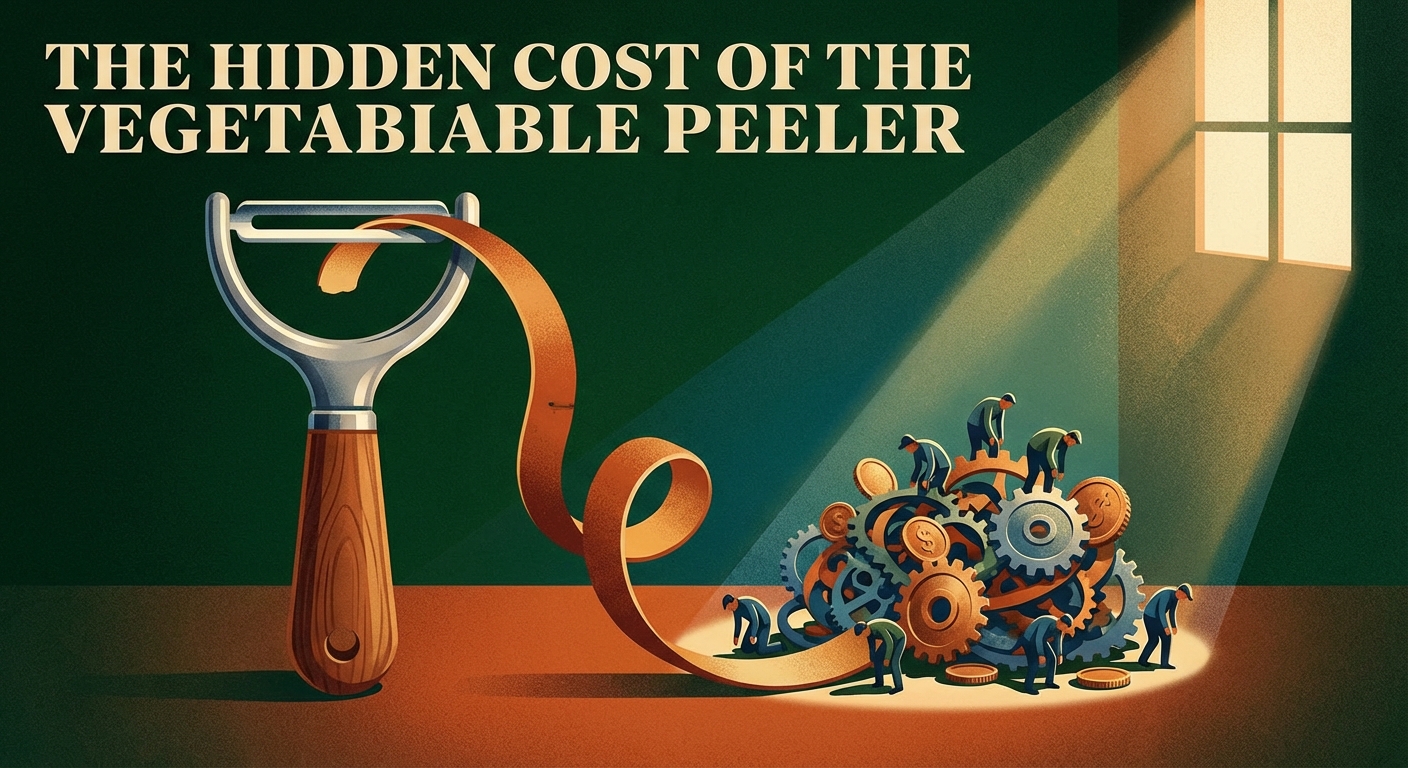
The Hidden Cost of the Vegetable Peeler
Let’s talk numbers for a second.
Studies estimate that the average household throws away hundreds of dollars in edible food every year.
A massive portion of that is produce scraps.
When you peel a potato, you lose about 20% of its weight.
When you toss broccoli stalks, you are throwing away nearly half the vegetable.
If you buy a bunch of beets and toss the greens, you just threw away a free side dish.
Paying for Weight You Don’t Eat
Think about how produce is sold.
You usually pay by the pound.
If you buy a pound of broccoli crowns at $2.99, but toss the stems, the price per edible pound skyrockets.
You are paying premium prices for trash.
By using the whole vegetable, you are instantly stretching your dollar.
You get more meals out of the same shopping cart.
The Nutrition You Are Missing
It isn’t just about money, either.
It is about value.
Often, the skins, stems, and leaves hold the highest concentration of fiber and antioxidants.
Potato skins are packed with potassium.
Broccoli stalks contain just as much vitamin C as the florets.
By throwing them away, you are literally discarding the nutrients you paid for.
Re-Thinking the "Nasty" Bits

Why do we peel and trim so aggressively?
Habit.
We see perfectly manicured vegetables on TV and in restaurants.
We assume the skins are dirty or the stems are tough.
But with a little knowledge, these "scraps" become the best part of the meal.
Texture is a Feature, Not a Bug
The main reason people toss stems is texture.
Kale stems can be woody.
Broccoli stalks can be tough.
But this isn’t a reason to trash them; it is a reason to treat them differently.
Cooking is all about transformation.
A tough stem adds a wonderful crunch to a stir-fry if sliced thinly.
A bitter leaf adds depth to a rich stew.
The Flavor is in the Skin
Have you ever noticed that a potato baked in its jacket tastes "potato-ier" than mashed potatoes?
The skin holds the earthy flavor.
Carrot peels have a concentrated sweetness.
Cucumber skins add a refreshing bitterness that cuts through rich dressings.
When we peel, we are stripping away the character of the vegetable.
We are left with something bland and generic.
Let's embrace the grit and the texture.
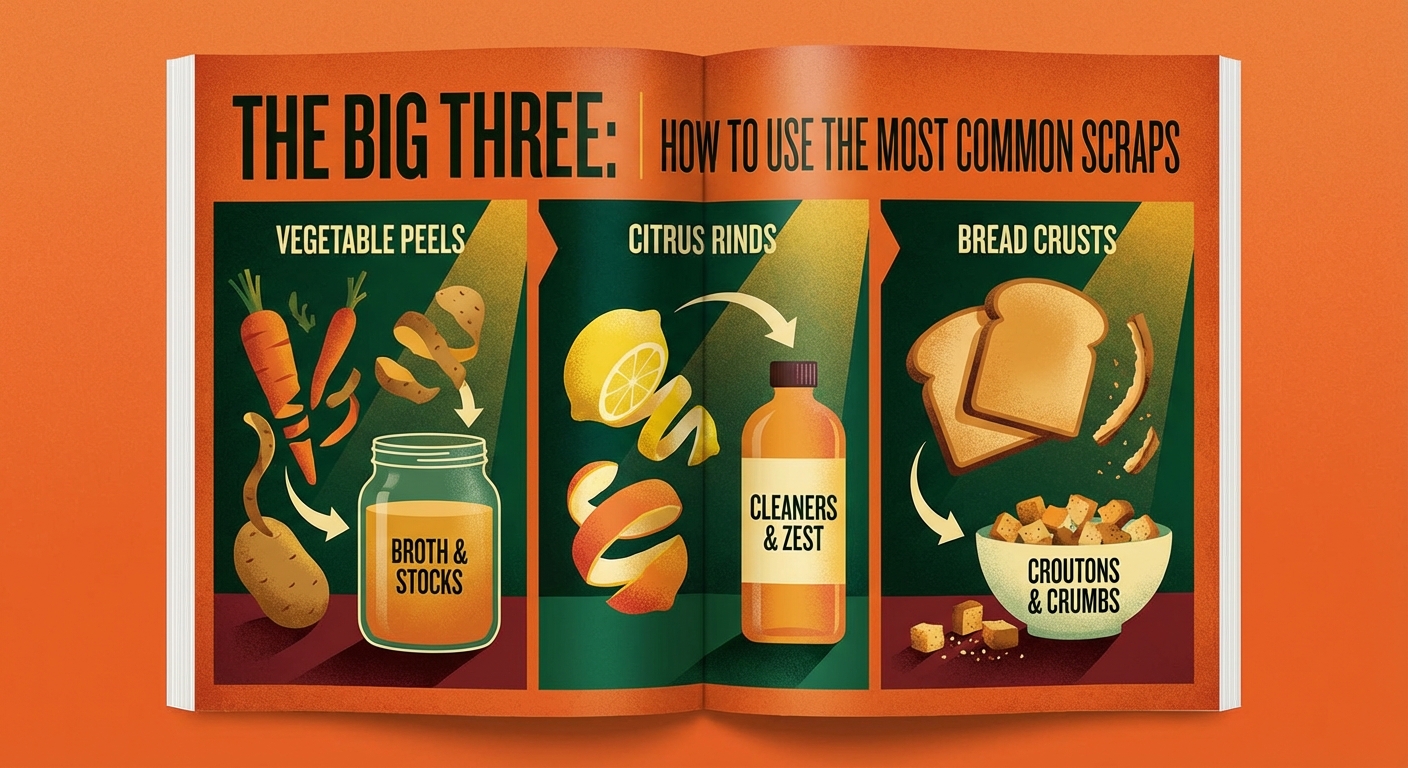
The Big Three: How to Use the Most Common Scraps
Okay, let’s get practical.
You are ready to save money.
But you don’t know what to do with that pile of trimmings.
Here are three of the most common offenders and how I use them in my kitchen.
1. Broccoli and Cauliflower Stalks
I will say it loud and clear:
The stalk is the best part of the broccoli.
It is sweeter and milder than the florets.
The problem is the thick, fibrous outer skin.
How to use it:
Simply slice off the very bottom inch of the stalk (which is usually dry).
Use a vegetable peeler to strip away the tough outer layer of the stalk.
Once you see the lighter, wet interior, stop peeling.
Slice that inner core into coins or matchsticks.
Cooking ideas:
* Stir-fry: Toss them in the pan two minutes before the florets.
* Slaw: Shred them raw with carrots and dressing.
* Soup: Boil them until soft and blend them for a creamy broccoli soup.
2. Herb Stems
We all pick the leaves off parsley and cilantro.
Then we are left with a sad pile of green stems.
Do not throw them away.
Those stems pack a massive flavor punch.
Cilantro stems, in particular, are incredibly aromatic.
How to use them:
Wash them well.
Chop them very finely, almost like a mince.
Cooking ideas:
* Flavor Base: Sauté the chopped stems with your onions and garlic at the start of a recipe.
* Asian Sauces: Blend cilantro stems into green curry paste or chutney.
* Infused Oils: Simmer woody stems (like rosemary or thyme) in olive oil, then strain.
3. Leafy Tops (Beets, Radishes, Carrots)
You buy a bunch of beets for the root.
But you get a massive bouquet of greens attached.
Most people twist them off and leave them at the grocery store.
Big mistake.
Beet greens are essentially Swiss chard.
Radish greens are peppery and delicious (when cooked).
Carrot tops taste like an earthy parsley.
Cooking ideas:
* Sautéed Greens: Treat beet and radish greens exactly like spinach. Garlic, oil, heat. Done.
* Pesto: Swap basil for carrot tops. Blend with walnuts, parmesan, and oil for a budget-friendly pesto.
* Salads: distinct baby beet greens are tender enough to eat raw.
Building Your "Liquid Gold" Bag
If you really can’t find a use for a scrap, don't trash it yet.
There is one final destination before the compost bin.
The Freezer Stock Bag.
This is the single easiest way to save money in the kitchen.
The Method
Keep a large Ziploc bag or silicone container in your freezer.
Every time you cook, throw your clean scraps in there.
What goes in:
* Onion skins and ends.
* Carrot peels.
* Celery tops.
* Mushroom stems.
* Herb stalks.
* Leek greens.
* Wilted green onions.
What stays out:
* Broccoli and cauliflower (they make stock bitter).
* Potatoes (they make stock cloudy and starchy).
* Rotting veg (obviously).
Making the Stock
When the bag is full, dump it into a big pot.
Cover it with water.
Add a pinch of salt and peppercorns.
Simmer for an hour.
Strain it.
You now have a rich, flavorful, vitamin-packed vegetable broth.
This would cost you $4.00 a carton at the store.
You made it for free, using garbage.
Use it for soups, risottos, or just cooking rice.
Radical Peels: Chips and Crisps
Let’s talk about snacking.
Snacks are expensive.
Potato chips are getting smaller and pricier.
But you have the raw materials right there on your cutting board.
Potato Peel Crisps
If you absolutely must peel your potatoes for a specific dish, save the skins.
Toss the skins in olive oil, salt, and smoked paprika.
Spread them in a single layer on a baking sheet.
Roast at 400°F (200°C) for about 10-15 minutes.
Keep an eye on them; they burn fast.
They turn into crunchy, salty, earthy chips that are better than anything in a bag.
The Apple Peel Snack
Making an apple pie?
Do not compost those peels.
Toss them with a little melted butter, cinnamon, and sugar.
Roast them until crispy.
It is a sweet, crunchy topping for oatmeal or yogurt.
It tastes like autumn in a bite.
Tools of the Trade
You don’t need fancy equipment for Root-to-Stem cooking.
But a few basics make it much easier.
A Razor-Sharp Knife
Cutting through tough squash skin or fibrous stems requires a good blade.
A dull knife is dangerous.
It slips on smooth vegetable skins.
Keep your chef’s knife honed.
It makes breaking down a whole cauliflower feel like cutting butter.
A High-Powered Blender
If you want to hide skins and stems, a blender is your best friend.
You can blend tough kale stems into smoothies.
You can puree roasted pumpkin skins into soup.
A good blender obliterates the texture issues that picky eaters might complain about.
A Scrub Brush
Since you are eating the skins, you need to clean them well.
Invest $5 in a stiff vegetable brush.
Scrub your carrots and potatoes under cold water.
This removes the dirt but leaves the nutrient-dense skin intact.
No peeling required.
The Bottom Line
Changing your cooking habits takes time.
You don't have to be perfect.
You don't have to save every single onion skin.
But start small.
Next time you buy broccoli, eat the stem.
Next time you peel a carrot, ask yourself if you really need to.
Next time you have a full freezer bag of scraps, make a pot of stock.
These small shifts add up.
You will notice your grocery bill shrinking.
You will notice your trash bag filling up slower.
And you might just discover that your favorite vegetable was the one you were throwing away all along.
Welcome to the world of Root-to-Stem.
Your wallet (and your tastebuds) will thank you.